Camel trekking in Morocco: where to go, what to expect, and how to pick an ethical operator
Where is the best place to go camel trekking in Morocco?
Erg Chebbi near Merzouga offers the most dramatic dune scenery for camel trekking. For a quick sunset ride without a long drive, Agafay Desert (45 minutes from Marrakech) works well. Erg Chigaga near M'Hamid offers the most remote experience.
Four very different places to ride a camel in Morocco
Morocco has camels everywhere tourists gather — and a wide spectrum of quality between a 10-minute photo-op in the Marrakech palmeraie and a genuine two-night trek through Erg Chebbi’s sand mountains. Getting the right experience means first knowing which of Morocco’s camel destinations actually fits your trip, then knowing what to look for in an operator.
The four main camel trekking locations each serve a different traveller profile: Erg Chebbi (Merzouga) for serious dune scenery, Erg Chigaga (near M’Hamid) for remote isolation, Agafay Desert for proximity to Marrakech, and the Zagora corridor for a budget-friendly overnight. Here is the full breakdown.
At a glance
| Best dune scenery | Erg Chebbi (Merzouga), dunes up to 150m |
| Most remote | Erg Chigaga, near M’Hamid |
| Closest to Marrakech | Agafay desert, around 45 min drive |
| Best budget overnight | Zagora corridor, around 6 hours from Marrakech |
| Comfortable ride time | 1-1.5 hours per session, up to 3-5 hours/day on multi-day treks |
| Best season | March-May and September-November |
Erg Chebbi (Merzouga): the benchmark camel trek
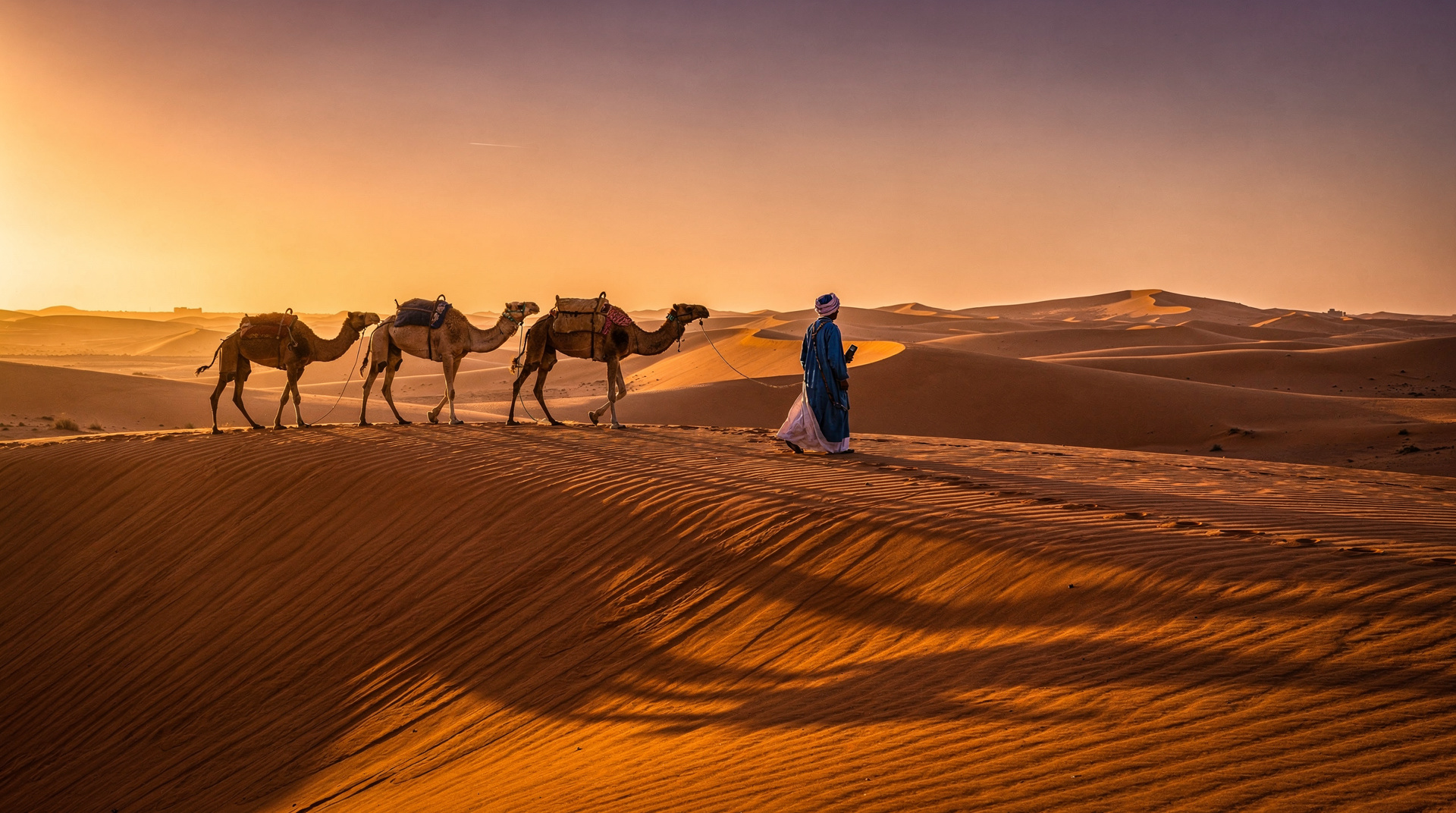
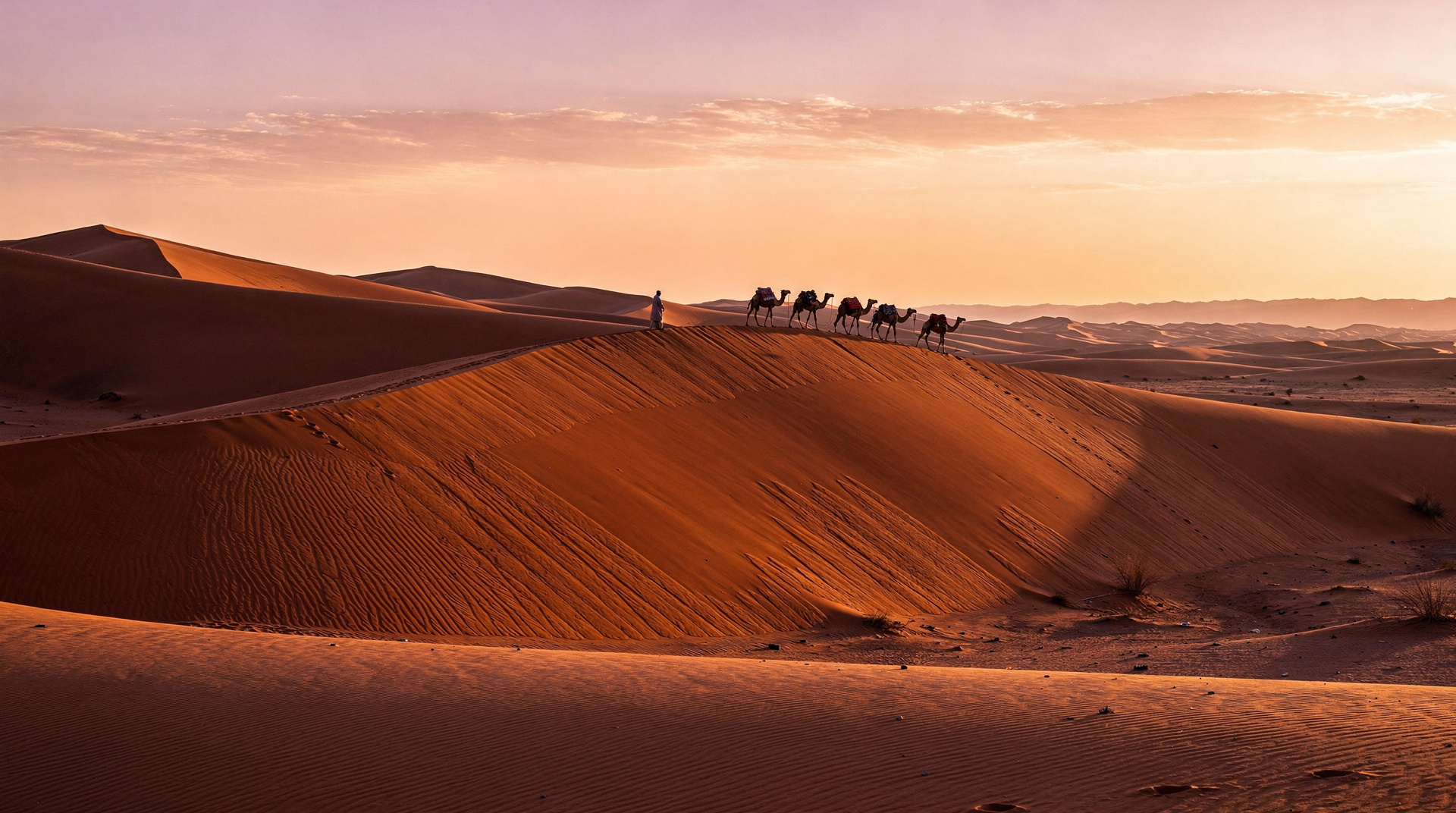
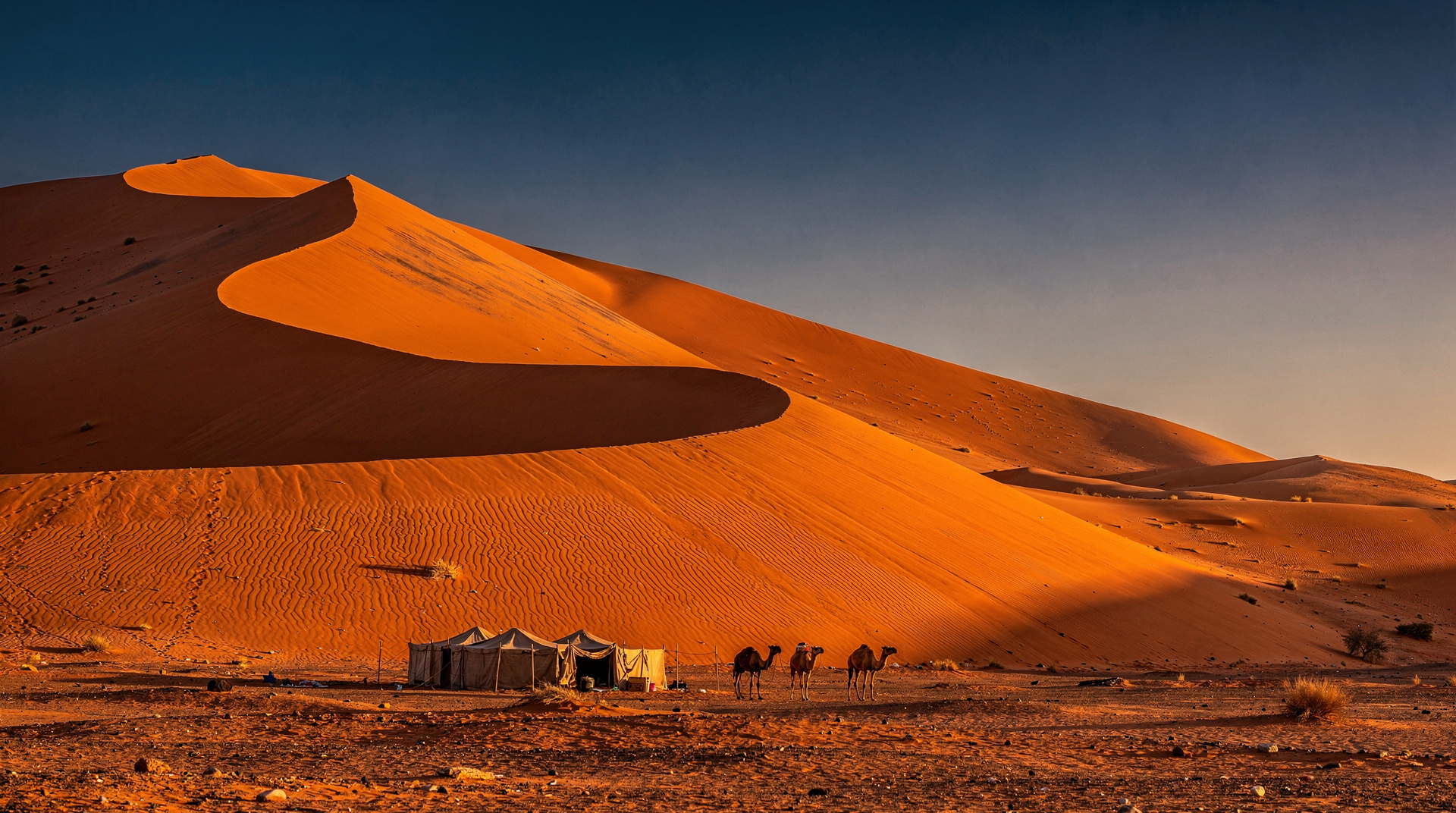
Erg Chebbi is Morocco’s most photogenic sand sea — dunes up to 150m, a warm orange-ochre colour that shifts dramatically at sunrise and sunset, and enough scale that a camel ride feels genuinely immersive rather than staged. This is the location that appears in most Morocco desert photography.
The nearest town is Merzouga, which sits at the western edge of the erg. From Marrakech the drive takes around 10 hours; from Fes approximately 7 hours. Most people combine the camel trek with a 3-day Sahara tour from Marrakech that also covers Aït Benhaddou and the Dadès Valley.
Sunset camel trek (1-2 hours)
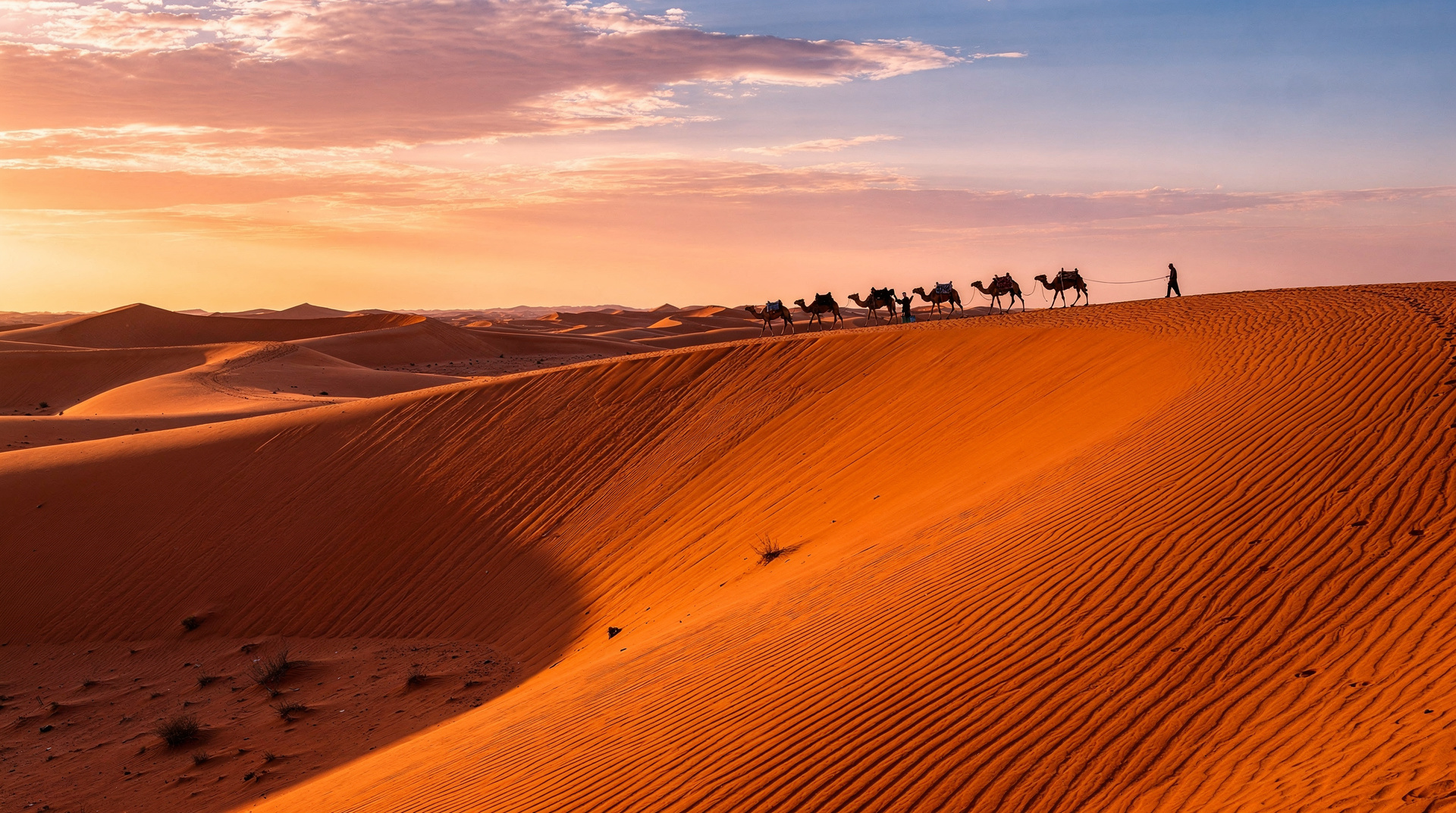
The most common format. You mount at a fixed point on the erg’s edge, ride for 40-60 minutes to a camp positioned inside the dunes, watch the sunset, and then either stay overnight or return by 4WD. This covers 3-5km and takes 1-1.5 hours of actual riding.
The Merzouga sunset camel trek to desert camp combines the evening ride with a camp overnight — the most efficient format for travellers arriving in Merzouga for a single night.
Overnight trek with camp
The full overnight experience: camel to camp in the late afternoon, dinner, Berber music around a fire, sleep in a tent, and sunrise from a dune ridge. The camel section itself is 1-1.5 hours each way; the rest of the time is camp life.
For a mid-range camp overnight, the Merzouga overnight desert camp with camel ride covers the standard format well. If you want the luxury camp version with private bathrooms and a curated dinner, the luxury desert camps guide has the full breakdown.
Multi-day treks (2-3 days)
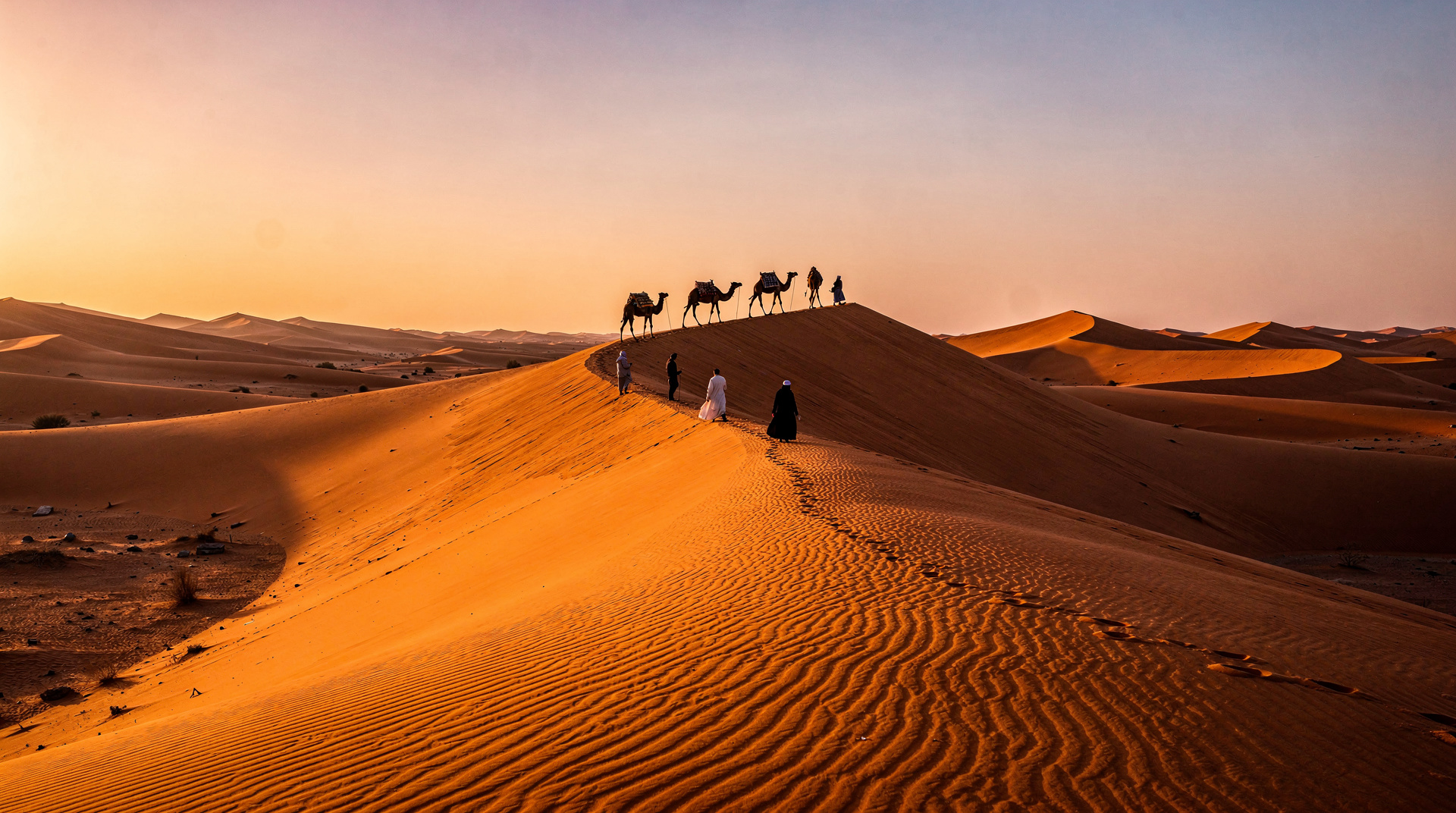
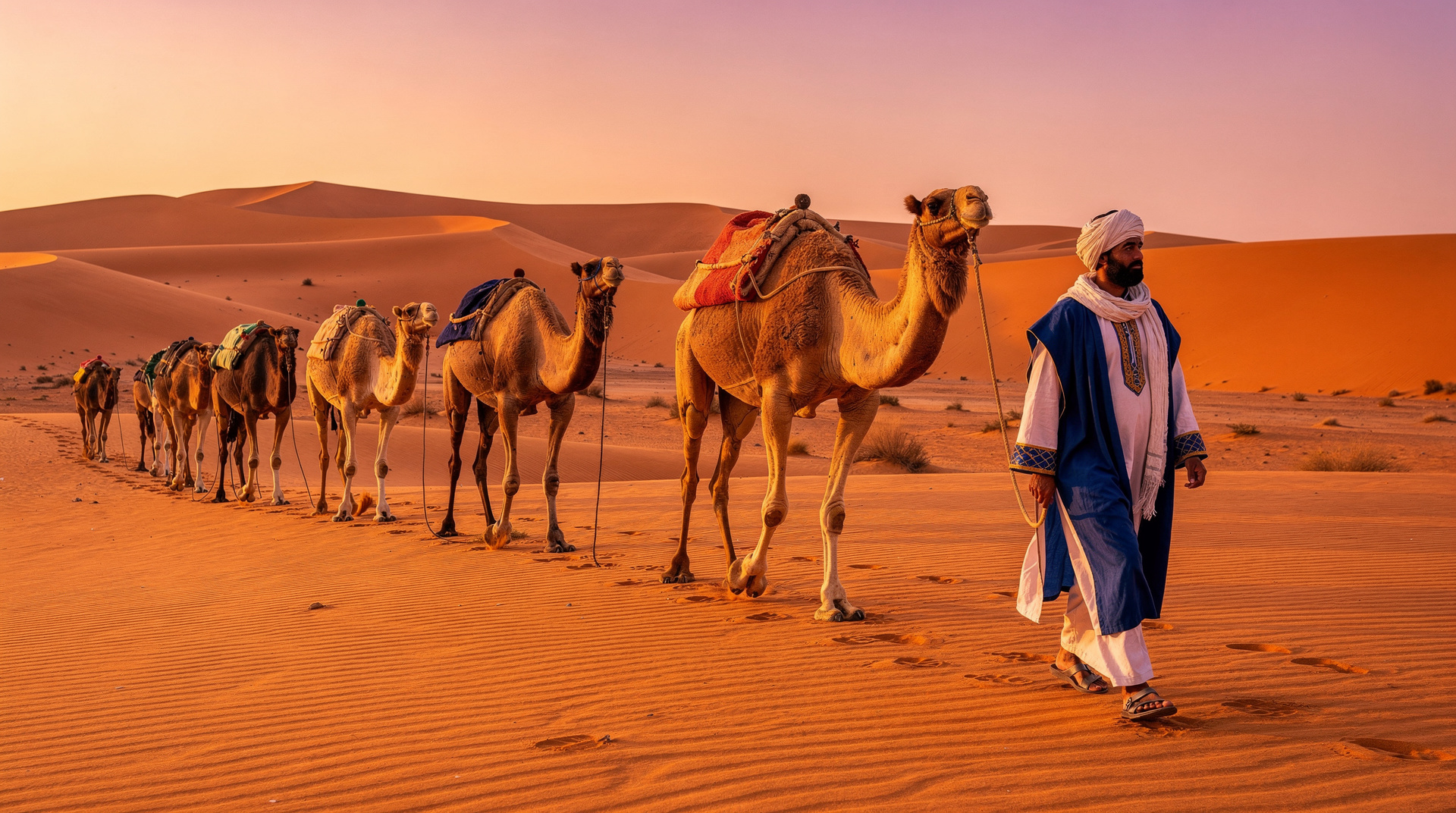
A small number of operators run genuine multi-day camel caravans at Erg Chebbi — typically 2-3 days moving between camps, covering 15-30km. These treks are slower, more meditative, and the most authentic recreation of traditional nomadic travel. Expect to ride 3-5 hours per day. The rest of the time is spent at camp, resting during midday heat, and exploring the dune landscape on foot.
Multi-day treks require booking with specialist operators well in advance. Expect to pay 150-250 EUR per person per day inclusive of camping, food, and guides. The key detail is that the camel you ride for 3 days becomes, in a genuine way, your camel — you learn its gait, you feed it at rest stops, and the bond adds something to the experience that a one-hour tourist ride doesn’t replicate.
Erg Chigaga (near M’Hamid): the remote option
Erg Chigaga is Morocco’s largest and most remote sand sea. It sits 60km from the nearest town, M’Hamid, across unpaved piste track. There are no villages at the edge of the dunes, no mobile signal, and the nearest luxury camp is only visible if you know where to look.
This is the choice for travellers who want the Sahara to feel genuinely wild. The dune scale is slightly smaller than Erg Chebbi (up to 100m), but the absence of other tourists and the profound silence compensate.
Access requires a 4WD vehicle or a multi-day camel trek from M’Hamid — the classic approach that traverses a variety of desert terrain before the main erg. The full M’Hamid-to-Chigaga camel trek takes 3-4 days. From Marrakech, M’Hamid is approximately 7 hours by road; add the 4WD transfer of 2-3 hours for the camp arrival.
For context on comparing the two major erg locations, the Merzouga vs Zagora guide covers the practical tradeoffs.
Agafay Desert: the Marrakech option
Agafay is not the Sahara. It is a rocky, arid plateau 40km southwest of Marrakech — striking in its own right, especially with the Atlas mountain backdrop, but without sand dunes. The camels here are primarily used for sunset rides combined with dinner shows.
The advantage is proximity: 45 minutes from Marrakech rather than 10 hours to Merzouga. For travellers with limited time, the Agafay camel sunset experience delivers a legitimate desert atmosphere without committing a full day to travel.
The Agafay Desert dinner under the stars with sunset camel ride combines the camel ride with an evening meal — a good format for the Agafay context.
The honest trade-off: the Agafay camel experience is more of an organised evening event than a genuine trek. The rides are short (30-45 minutes), the terrain is flat, and the camel element is one part of a larger programme that also includes dinner and entertainment. It works as an evening out from Marrakech; it is not a substitute for the Erg Chebbi experience.
Zagora corridor: budget overnight treks
The Zagora region offers 2-day camel treks into the Draa Valley desert — a mix of rocky hammada and smaller dunes near Erg Lihoudi. The dunes are modest compared to Erg Chebbi, but the route through the Draa Valley palmeraie adds a different landscape element.
Zagora is 6 hours from Marrakech (faster than Merzouga) and prices for overnight treks run about 30% cheaper. Budget travellers often prefer this route for a 2-day Sahara trip without the longer drive. The Merzouga vs Zagora comparison covers this tradeoff in detail.
What a camel trek actually feels like
Getting on the camel: You mount from a kneeling camel — the animal lurches forward then back as it rises. If you’re not warned, the motion surprises most people. Hold the saddle pommel firmly. Once upright, the gait is a slow side-to-side sway, 2-4km/h.
Riding position: The wooden saddle has a blanket layer, but 1-1.5 hours is the comfortable limit for most riders. After 2 hours, the hip pressure becomes significant. Multi-day trekkers develop calluses and technique over days 1-2; by day 3, it’s genuinely comfortable.
The pace: Camels set the rhythm. There is no way to rush a camel caravan. This is partly the point. The walking speed forces you to notice the shifting dune light, the quality of the silence, the occasional wind patterns in the sand.
Dune climbing: Camels navigate dunes with a surprising ability to read terrain. They pick routes up steep slopes that seem impassable and descend with a lurching, rear-weight-shift technique. Riders lean forward on ascents and hold tight on descents.
Packing for a camel trek
Essential:
- Headscarf or buff (wrap around nose and mouth in wind)
- Sunscreen SPF 50+ (sand amplifies UV)
- Sunglasses with UV protection (polarised helps in dune glare)
- Layers: desert mornings are cold (near 0°C in winter, 10-15°C in spring/autumn)
- Closed footwear — trainers, not sandals (sand is hot and sharp on bare feet)
- 2L water minimum per person per riding day
Leave behind:
- Hard-sided luggage (camels carry soft bags in saddlebags)
- Valuables beyond your camera
- White linen (sand stains)
For overnight treks:
- Sleeping bag liner (camps provide blankets but an extra layer is worth it October-March)
- Power bank (charging at camps is limited)
- Cash in MAD — no ATMs inside any erg
How to pick an ethical camel operator
The camel tourism industry in Morocco ranges from well-run operations with healthy, well-cared-for animals to exploitative setups where camels are overworked and undernourished. The visual cues to check:
Healthy camel signs:
- Good body weight (ribs not visible, hump not collapsed)
- No open sores or rope burns at the halter points
- Alert eyes (not sunken or dull)
- Clean mouth and nostrils
Unhealthy operator signs:
- Camels working continuously without rest (ethical operations rest animals for significant portions of the day)
- Young camels being used for heavy work (adult camels only should carry adult passengers)
- No water available for animals at stops
- More than 5-6 hours of riding per day
Operator-level indicators:
- Can the operator name the guides who will lead your trek?
- Is there a veterinary contact for the animals?
- Do guides speak enough English (or your language) to give proper pre-trek safety briefing?
- Are saddle pads properly fitted and inspected before loading?
The 3-day desert tour from Marrakech to Merzouga uses vetted operators on the GYG platform, which adds a layer of accountability through the review system. Reading recent reviews specifically for camel handling comments is useful — experienced travellers notice and report on animal welfare.
Prices (2026 reference)
| Format | Location | Price per person |
|---|---|---|
| 30-min photo ride | Marrakech palmeraie | 100-200 MAD (10-20 EUR) |
| 1h sunset ride | Agafay | 200-400 MAD (20-40 EUR) |
| 1.5h trek to camp | Merzouga (Erg Chebbi) | Included in most overnight packages |
| Overnight with camp | Merzouga | 80-350 EUR (camp tier dependent) |
| 2-day trek | Zagora corridor | 120-200 EUR all inclusive |
| 3-day trek | Erg Chebbi | 200-450 EUR all inclusive |
Season and timing
Best months for camel trekking: March-May and September-November. Temperatures are manageable (20-30°C during the day), nights are cool but not freezing, and the light is excellent for photography at both ends of the day.
December-February: Cold nights (can drop below 0°C in the erg) and occasional wind. Trekking is possible but requires proper sleeping gear. Some camps close or reduce services.
June-August: Daytime temperatures of 40-45°C make long camel treks genuinely dangerous without early-morning or late-evening timing. The desert is at its most dramatic visually but the heat is punishing. Experienced operators limit riding to pre-sunrise and post-sunset hours in summer.
For full month-by-month timing, the best time to visit Morocco guide has the detailed breakdown.
Connecting camel trekking with the broader desert experience
Camel trekking works best as part of a multi-activity desert stay. Combine it with:
- Sandboarding on the dune slopes in the morning (before the sand heats up)
- Quad biking across the flat hammada around the erg
- Evening stargazing — the Erg Chebbi dark sky is genuinely extraordinary (see stargazing in the Sahara)
- Photography sessions at sunrise and sunset
The Sahara desert destination guide covers the full logistics of planning a desert stay, including transport from Marrakech and Fes, camp booking, and how to structure a 2-3 day itinerary.
Frequently asked questions about Camel trekking in Morocco
Is camel riding safe?
For adults in good health, yes. The main risk is falling during mounting or dismounting — always stay seated when the camel is moving between sitting and standing. Anyone with severe lower back problems or hip issues should take the 4WD alternative; the saddle puts significant lateral pressure on the hips after 1+ hours.
Can children ride camels?
Children over 5-6 years typically ride well, usually in front of a parent on the same camel or on a smaller, gentler animal. Operators at Merzouga have experience with families. Always confirm the operator is set up for children before booking.
Do I need to tip the camel guide?
Yes. Guides who lead camel treks are typically paid low base wages with tips as a significant component of income. 50-100 MAD per guide per trek is appropriate for a standard 1-1.5h ride; more for a full-day or multi-day guide.
What happens if I’m too heavy or too tall?
Camels can carry up to approximately 180-200kg, but reputable operators set a practical passenger weight limit of 110-130kg. Very tall riders (over 195cm) can find saddle geometry uncomfortable. Ask operators directly — the honest ones will advise you to take a 4WD if there’s a genuine fit issue.
Is camel trekking worth it if I’m short on time?
Yes, with the right choice of location. Agafay delivers a legitimate desert atmosphere in an afternoon from Marrakech, without the 10-hour drive to Merzouga. If your schedule allows a 3-day Sahara tour from Marrakech, the Erg Chebbi experience is worth the extra travel time — the scale of the dunes and the overnight camp are simply a different level of experience than Agafay’s short evening format.
Traveling with children on a camel trek
Families often ask how the Merzouga or Agafay treks work for kids specifically — the age guidance, ride duration, and safety details differ enough from the adult trek to warrant separate planning. The camel rides for kids guide covers age-by-age recommendations, the mounting/dismounting lurch that catches children off guard, and which of the four locations suits which age group.