Berber villages of the Atlas: how to visit authentically and what to avoid
Which Berber villages in the Atlas Mountains are worth visiting?
Imlil and Aroumd in the Toubkal area are most accessible and authentic. Setti Fatma in the Ourika Valley combines village visits with waterfall hiking. Ouirgane is quieter and less touristy. All are within 2 hours of Marrakech.
What makes a village visit authentic — and what doesn’t
Morocco’s tourist infrastructure has developed a particular format for “Berber village experience” — usually a coached stop at a pre-arranged family home or a carpet cooperative framed as a domestic visit, followed by mint tea and a sales pitch. This is not an authentic village experience. It is a transaction with cultural set-dressing, and most experienced travellers find it unsatisfying.
Genuine Atlas Berber village visits look different: walking into a village at your own pace, stopping at a bread oven, buying fresh msemen from a woman baking outside, wandering lanes without a script, accepting tea from a family you meet by coincidence rather than arrangement. The difference is significant and it’s achievable — it just requires going about it differently.
This guide covers the main Atlas village destinations, what authentic interaction looks like, cultural etiquette, and how to structure a visit that’s genuinely worthwhile rather than staged.
| At a glance | |
|---|---|
| Where | Imlil, Aroumd, Setti Fatma, Ouirgane — High Atlas, 1-2 hours from Marrakech |
| Cost | Self-organised day trip around 100-200 MAD transport; organised day trips around 200-400 MAD with guide |
| Time needed | Half-day for a single village, full day for Toubkal-area villages plus a short walk |
| Getting there | Rental car, shared grand taxi from Bab er-Rob, or an organised day trip from Marrakech |
| Best time | April-June and September-November; avoid peak summer heat at lower elevations |
The Amazigh (Berber) people of the High Atlas
Before visiting, it helps to understand who you’re meeting. The High Atlas Berbers belong to the Chleuh branch of the Amazigh people — North Africa’s indigenous population, predating Arab presence by thousands of years. They speak Tachelhit (the Souss-Atlas Berber language), most also speak Moroccan Arabic (Darija), and educated generations speak French.
The mountain communities survived by adapting to challenging altitude terrain. Traditional livelihoods were pastoral (sheep and goat herding on high pastures in summer) and agricultural (terraced orchards and cereal cultivation in valley floors). Tourism has significantly altered this, particularly in villages near Imlil and Setti Fatma, but genuine agricultural life continues alongside it.
Cultural notes:
- Hospitality (in Arabic: karam) is deeply valued. An invitation to tea is genuine, not obligatory
- Dress modestly in villages — covered shoulders and knees for both men and women is appropriate
- Always ask permission before photographing individuals, particularly women
- Shoes off at thresholds when entering a home
- Respectful curiosity is welcomed; intrusive camera behaviour is not
Imlil and Aroumd: the Toubkal gateway villages
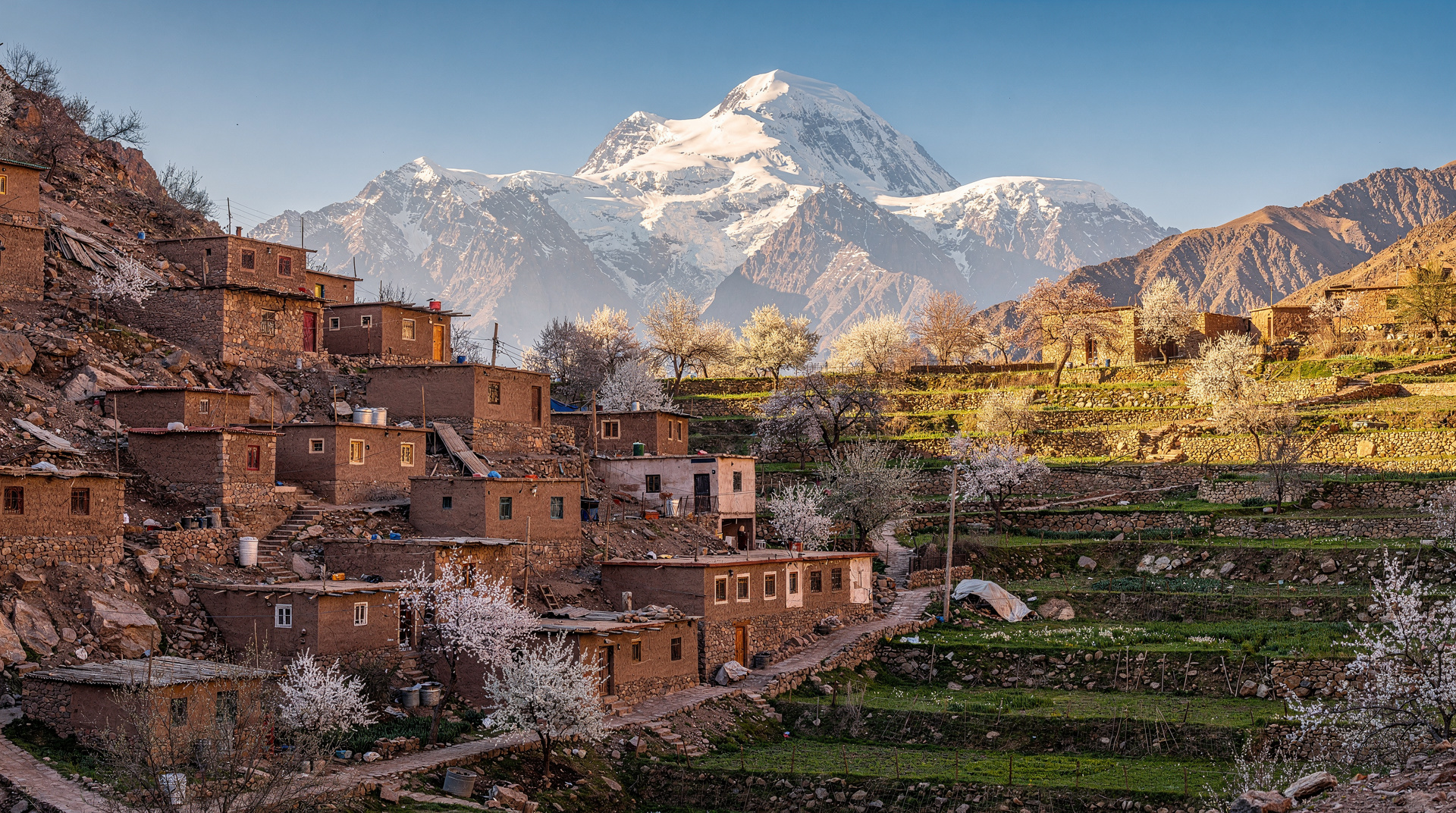
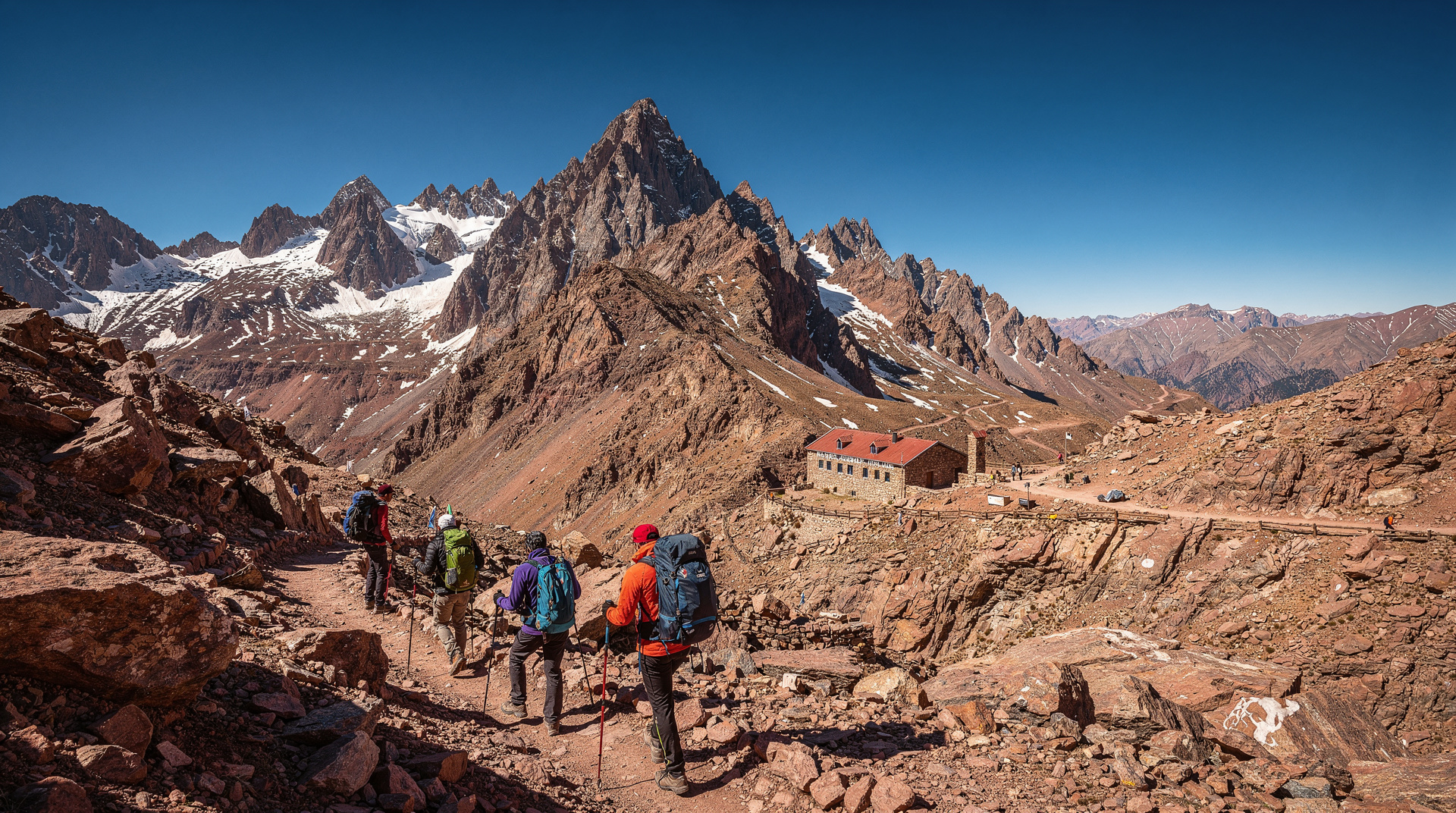
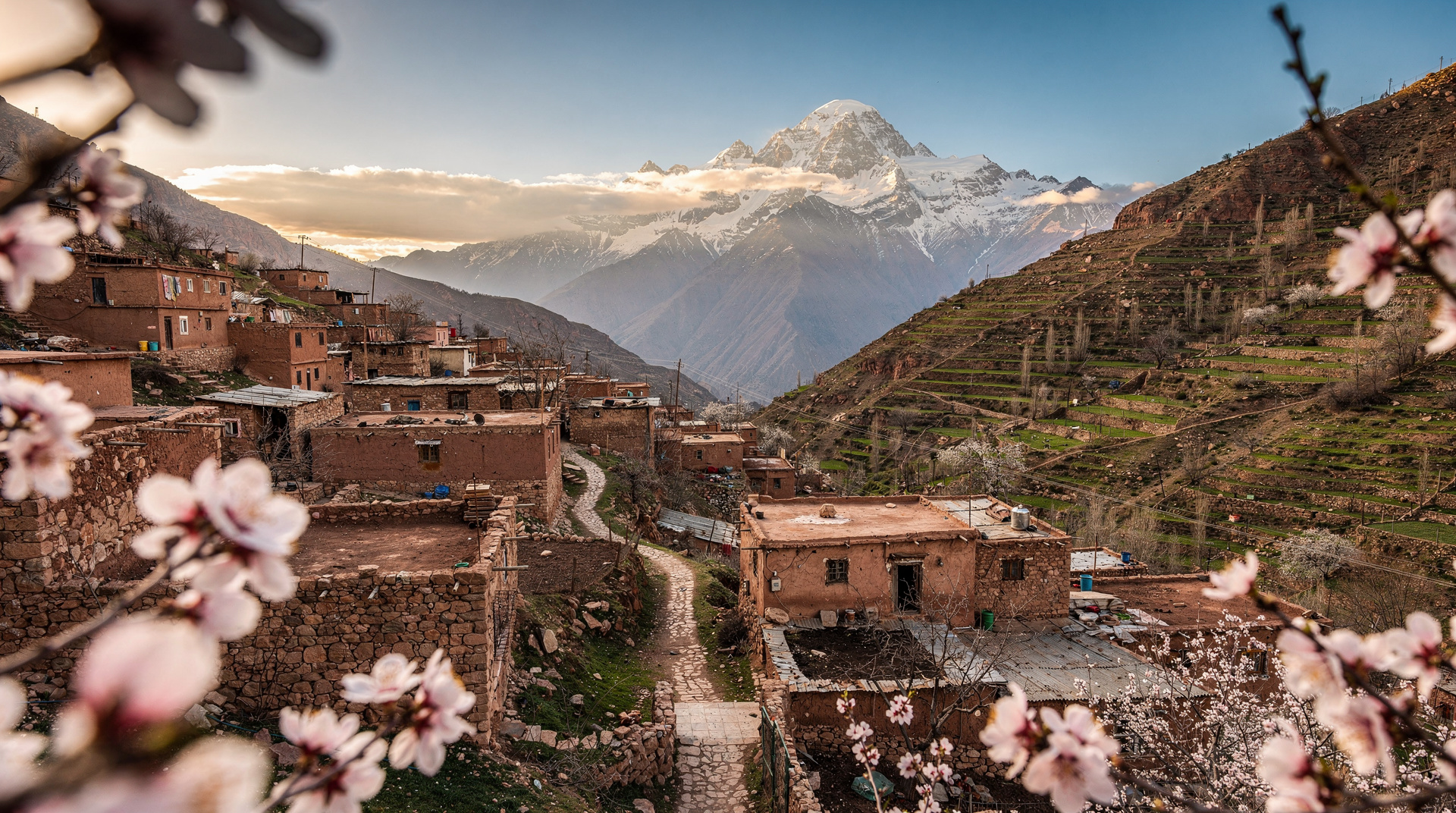
Imlil (1,740m) is the main staging point for Toubkal treks and the most visited Atlas village. It has hotels, mule hire, guide offices, and the full tourist infrastructure of a well-established trekking base. The village itself retains character: a mixed-use main street with working farmers and muleteers alongside tourist equipment shops, traditional bread ovens operating alongside cafés, children playing football next to trekking groups.
What to do in Imlil beyond the Toubkal approach:
- Walk the terraced fields above the village in early morning (spectacular light on the Atlas faces)
- Visit the small hammam in the village centre (basic, functional, 30-40 MAD)
- Talk to mule handlers and local guides in the early morning around the mule corral — this is where the working Atlas farming economy is most visible
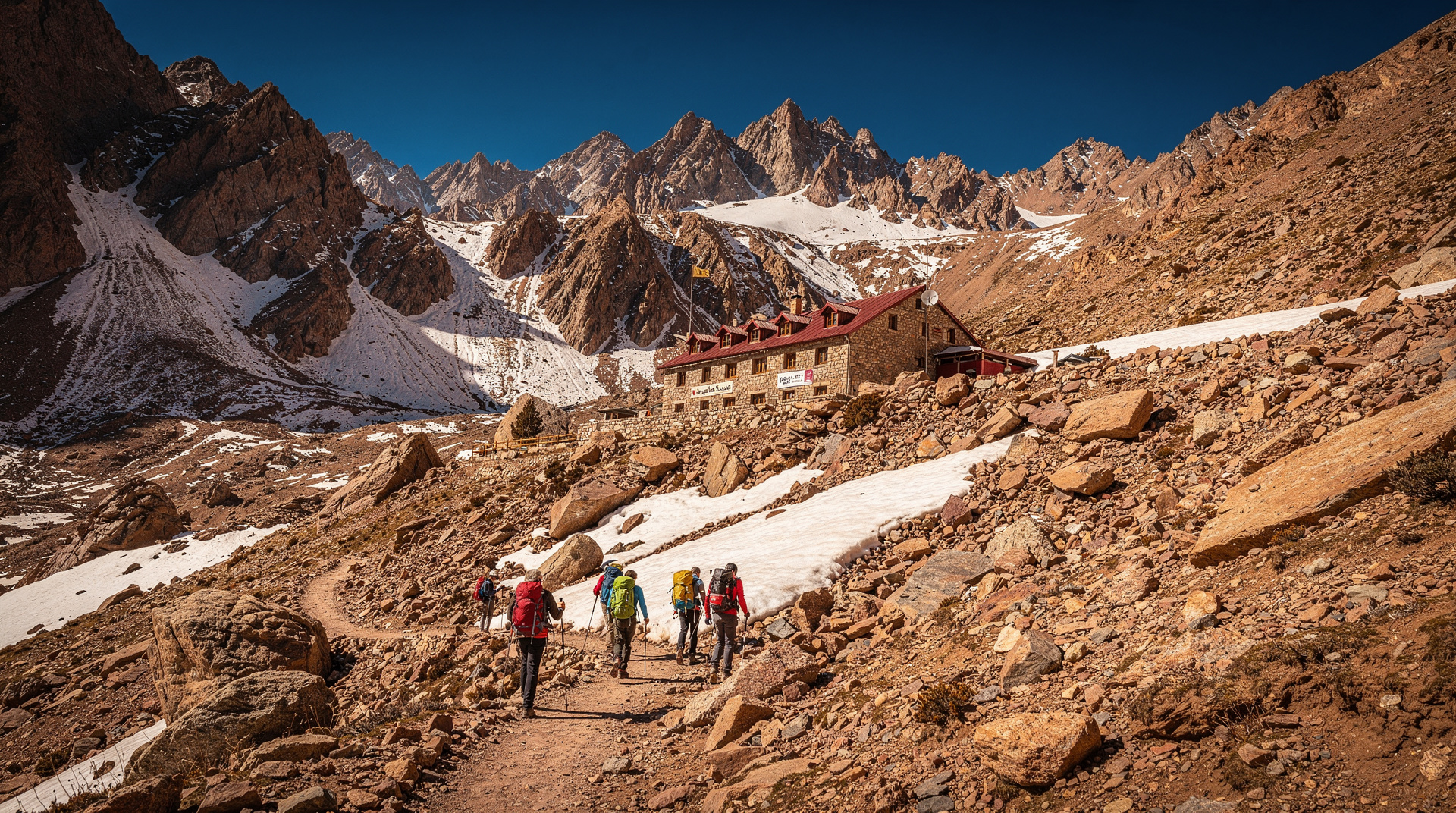
Aroumd (1,840m): A 30-minute walk above Imlil, Aroumd is noticeably quieter and more agricultural. It’s the last village before the serious Toubkal ascent begins. Several families here rent rooms and serve meals, and the terrace café at Aroumd has been a trekker institution for decades. The mule handlers who carry gear up to the Toubkal refuge overnight here, and the early morning scene of mules being loaded is one of the most authentic glimpses of working Atlas life available to visitors.
The Berber village and Atlas Mountains day trip from Marrakech covers Imlil and lower Atlas villages with transport and guide from Marrakech included — a good entry point if you don’t have a car.
Setti Fatma: villages and waterfalls in the Ourika Valley
Setti Fatma sits at the upper end of the Ourika Valley, 65km southeast of Marrakech (1.5-hour drive). It’s one of the most visited Atlas communities due to its combination of village life and a series of seven waterfalls accessible by a riverside trail.
The village itself is now largely tourist-service-oriented — restaurants and shops line the main street. The authentic agricultural life has retreated further up the valley. But the waterfall hike is genuinely worth the visit.
The Setti Fatma waterfall trail:
- The first waterfall is a 30-minute walk from the village along a rocky riverside trail
- The full 7-waterfall circuit takes 3-4 hours round trip
- The upper falls (beyond the 3rd) see significantly fewer visitors
- The trail requires basic scrambling ability; not suitable for very young children on the upper section
- Swimming is possible at the base of several falls in summer (water is cold)
What the village visit adds: The Setti Fatma souk (Monday market) is a genuine local market, not a tourist market — argan soap, household goods, livestock, and local produce alongside tourist items. Visiting on a Monday morning gives a completely different character to the place.
For the full Ourika Valley experience with transport from Marrakech: the Atlas Mountains three valleys day trip covers the broader valley circuit. For Setti Fatma specifically, the Atlas Mountains destination guide has local detail.
Ouirgane: the quietest Atlas option
Ouirgane sits at 1,025m in the valley between Marrakech and Imlil, approximately 60km from the city. It’s a small village surrounded by walnut and olive orchards with a lake (Lac d’Ouirgane) that provides a tranquil backdrop. Compared to Imlil and Setti Fatma, it’s significantly less visited — a working farming community rather than a tourist base.
Why Ouirgane works:
- A gentle 2-3 hour valley walk through working orchards and small hamlets is accessible independently
- The village café serves basic meals (tagine, harira) to the local population rather than tourist-optimised menus
- The lake area is peaceful and offers swimming in summer
- Several eco-lodges in the Ouirgane area offer genuine immersive stays (2-3 nights) that function as proper rural accommodation rather than tourist operations
Ouirgane day trip from Marrakech: 1-1.5 hours by car. No organised day trips from Marrakech specifically to Ouirgane, so a rental car or private taxi is needed. The drive via Asni and the R203 passes through classic Atlas landscape.
The Atlas three valleys: a broader hike
The Atlas Mountains 3 valleys and waterfalls day trip from Marrakech covers a broader circuit linking multiple valley communities in a single day — a good format for those wanting to see more than one village environment. The driving-and-walking combination gives a better sense of the Atlas’s varied landscape than a single-valley approach.
How staged experiences are identified and avoided
The key markers of a staged experience:
Pre-arranged “spontaneous” home visits: If your guide leads you to a specific house, knocks, and is immediately welcomed with a tea tray already laid out, this is a rehearsed sequence. The family hosts are participating in a structured programme, which may be entirely decent but isn’t what most visitors are seeking when they ask for authentic experience.
Shopping framing: A “traditional home visit” that concludes in a room full of carpets or argan products for sale is a retail visit with cultural presentation. Legitimate enough if you understand what it is; frustrating if you expected something different.
Village “guides” at entrance paths: In popular villages, men position themselves at trail entrances and offer to show visitors around for a fee. This is a service business, not a spontaneous encounter. It can still be worthwhile — local guides provide genuine cultural context — but set the fee explicitly before starting.
The antidote: Go slowly. Don’t follow a predetermined route. Sit at a local café for an hour. Watch the bread oven. Ask your guide not to make any pre-arranged visits. Accept that this approach might yield less “content” per hour but substantially more genuine contact.
Cultural etiquette in Atlas villages
Greeting: “As-salamu alaykum” (Peace be upon you) is the universal greeting. The response is “wa alaykum as-salam.” Using this rather than a generic “bonjour” is genuinely appreciated in Amazigh communities.
Tea invitations: An invitation to mint tea is an expression of hospitality, not a prelude to a sale. You’re not obligated to buy anything by accepting. Declining politely is fine; accepting and then declining to buy anything is fine too.
Photography protocol: Ask before photographing individuals. “Photo?” said while gesturing to your camera is universally understood. People who say no mean it. Children often enjoy being photographed and seeing the result on screen. Women in traditional contexts often prefer not to be photographed; respect this without making a production of it.
Entering homes: Remove shoes at the threshold when invited in. Sit where directed (guests are usually seated in the main room, not the kitchen or private family areas). Don’t wander uninvited to other rooms.
Bargaining: Applies in markets and souvenir shops, not in restaurants, cafés, or for services with posted prices. Offer 50-60% of the initial asking price in markets and settle somewhere between.
Connecting village visits to the wider Atlas itinerary
Atlas village visits work well combined with:
- The Toubkal trek guide — Imlil and Aroumd are natural stop-offs before and after a Toubkal attempt
- Multi-day Atlas treks — the best way to experience remote villages is to pass through them on a longer route
- The Marrakech region destination guide covers the Ourika and Oukaimeden valleys in the context of a broader Marrakech base
For travellers specifically interested in hiking through village terrain, the hiking and trekking section covers the full range of Atlas trail options.
Practical notes
Best time to visit: April-June and September-November. Spring wildflowers in the lower valleys are exceptional. Avoid the intense heat of July-August at lower village elevations (Setti Fatma, Ouirgane are hot in summer).
Getting around: A rental car gives maximum flexibility. Shared grand taxis from Marrakech’s Bab er-Rob station serve Asni (then connection to Imlil) and Ourika Valley towns including Setti Fatma. Organised day trips from Marrakech are the easiest option if you don’t want to drive.
Budget: A basic day trip to Imlil or Setti Fatma, self-organised by public taxi, costs 100-200 MAD (10-20 EUR) in transport each way plus meals. Organised day trips from Marrakech run 200-400 MAD (20-40 EUR) with guide.
Frequently asked questions about Berber villages of the Atlas
Is it appropriate to visit Berber villages without a guide?
Yes. Walking into any of these villages independently is entirely fine. You may attract the attention of local informal guides (declining politely is easy). Having a guide adds cultural depth and language facilitation; it’s not logistically necessary.
What should I bring as a gift if invited for tea?
Nothing is required. If you want to bring something, a bag of quality dates (sold in any Moroccan market) is appropriate. Bringing gifts for children (sweets, stationery) can create difficult dynamics — it’s best to let the social interaction unfold naturally without props.
Do Atlas villages have ATMs or card payment?
No. Bring cash — Moroccan dirham. The nearest ATMs to Imlil are in Asni; for Setti Fatma, they’re in Marrakech. Amounts needed for a village day trip are modest (meals, taxi fares, guide tips) but cash is essential.
Which village should a first-time visitor pick if they only have time for one?
Imlil, combined with the 30-minute walk up to Aroumd. It has the best infrastructure for a low-effort visit, the mule-corral scene is genuinely revealing of working Atlas life, and it doubles as a preview if you’re considering the Toubkal trek later in the trip. Setti Fatma is the better pick if you specifically want a waterfall hike alongside the village visit.
Choosing between the four main villages
| Village | Distance from Marrakech | Character | Best for |
|---|---|---|---|
| Imlil | ~65km (1.5h) | Established trekking base, mixed-use | First-timers, Toubkal staging |
| Aroumd | ~65km + 30min walk | Quieter, agricultural | Working mule-corral scene |
| Setti Fatma | ~65km (1.5h) | Tourist-service main street, waterfalls above | Combining a hike with a village stop |
| Ouirgane | ~60km (1-1.5h) | Working farming community, lake | Genuine quiet, independent walking |