Multi-day Atlas treks in Morocco: Toubkal Circuit, M'Goun, and lesser-known routes
What are the best multi-day treks in Morocco's Atlas Mountains?
The Toubkal Circuit (5-7 days around the Toubkal massif) and the M'Goun Traverse (5-7 days through the Eastern High Atlas) are the two main routes. Both involve passes above 3,000m and remote Berber village stays. M'Goun is quieter and arguably more beautiful.
Beyond the summit: multi-day trekking in the High Atlas
The standard Toubkal two-day trek to the summit and back is Morocco’s most popular mountain itinerary. It’s excellent. But it uses the same route in both directions, focuses on a single objective, and sees all the traffic that popularity brings.
Multi-day Atlas treks offer something different: days of walking through high valleys and across mountain passes with no return to the same terrain, remote Berber villages accessible only on foot, and the kind of sustained engagement with landscape that’s impossible to achieve in a 48-hour dash to a summit.
This guide covers the main multi-day options, the logistics of planning them, accommodation systems, and how to put together a week that goes significantly beyond the standard tourist track.
| At a glance | |
|---|---|
| Where | High Atlas, base towns Imlil (Toubkal) or Tabant/Azilal (M’Goun, Ait Bougmez) |
| Cost | Roughly 350-600 MAD (35-60 EUR) per person per day guided, or 100-200 EUR/day all-inclusive with an agency |
| Time needed | 3-7 days depending on route; add 1-2 buffer days for weather |
| Getting there | 1.5-2h from Marrakech to Imlil; around 3-4h to Tabant/Azilal for M’Goun and Ait Bougmez |
| Best time | September-October for stable weather; June also reliable |
The Toubkal Circuit (5-7 days)
What it is
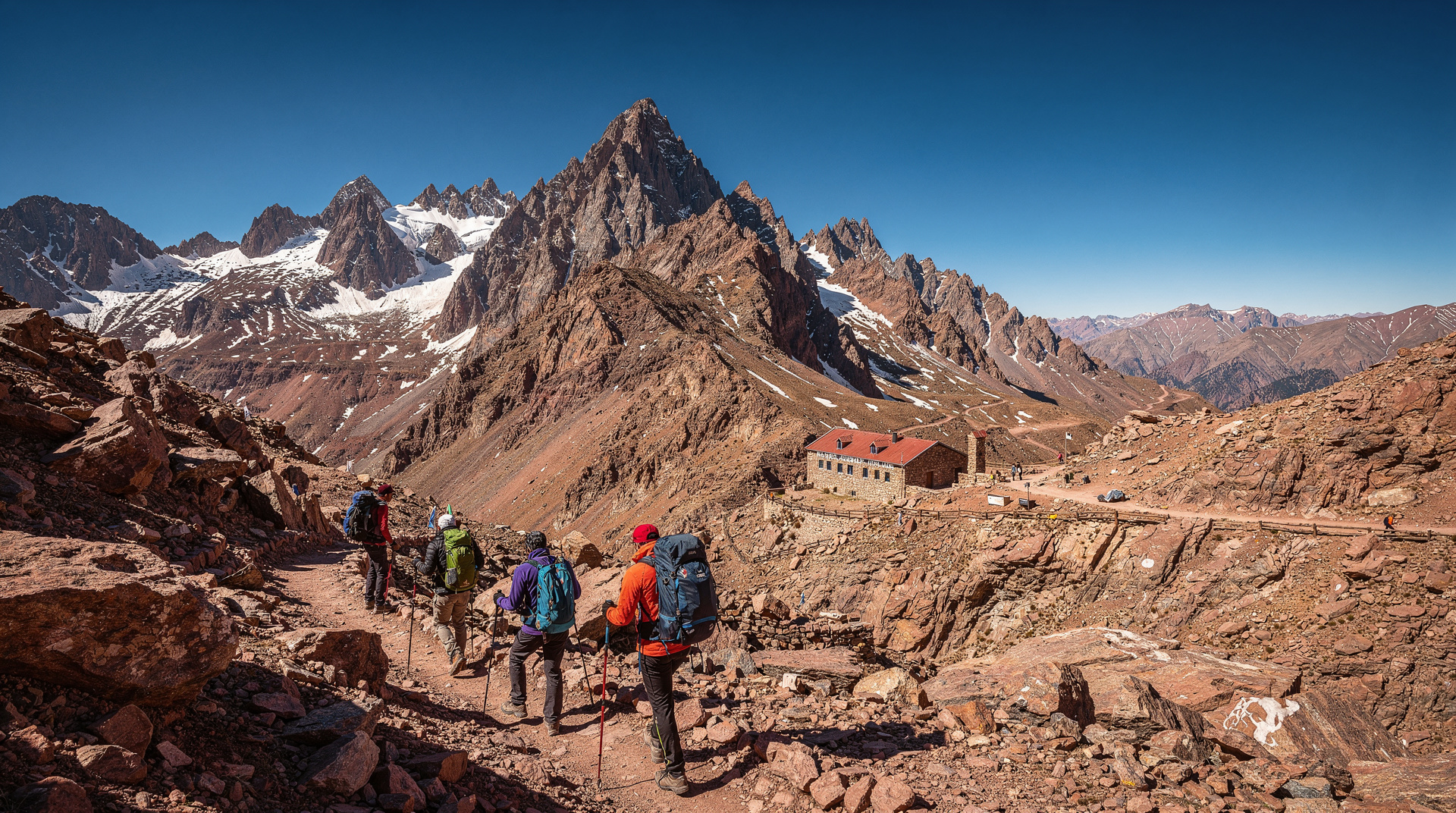
The Toubkal Circuit is a circumnavigation of the Toubkal massif — a loop route that starts and ends in Imlil but takes a different path in each direction, crossing multiple passes above 3,000m. The summit of Toubkal itself can be included or omitted depending on your preference and fitness.
Classic itinerary (7 days)
Day 1: Imlil (1,740m) → Aroumd → Toubkal Refuge (3,207m) — 5-6 hours Day 2: Toubkal Refuge → Toubkal Summit (4,167m) → return to refuge — 6-8 hours total Day 3: Refuge → Col de Toubkal → Tizi n’Ouanoums (3,664m) → Azib Likemt (2,600m) — 6-7 hours Day 4: Azib Likemt → Tizi n’Tighist (3,100m) → Amsouzart — 5-6 hours Day 5: Amsouzart → Tizi Oussem (2,500m) → traverse to Tacheddirt (2,314m) — 6-7 hours Day 6: Tacheddirt → Tizi n’Tadat (3,100m) → Ait Souka → return to Imlil — 5-6 hours
5-day variant: Omit the Toubkal summit day and take a more direct line across the massif, covering the essential circuit without the 4,167m objective.
What makes the circuit special
The circuit passes through terrain that changes completely with each day. The south side of the Toubkal massif (Days 3-4) is drier, more dramatic in its rock faces, and sees very few trekkers. The Amsouzart valley is particularly remote — a deep agricultural valley connected to the outside world primarily by the trail you’re walking.
The north side (Days 5-6) returns through greener, more fertile terrain with walnut orchards, flowing streams, and several villages that see day-trekkers from Imlil. The contrast from the south side isolation is significant.
The M’Goun Traverse (5-7 days)
What it is
The M’Goun Traverse is the primary trekking route through the Eastern High Atlas — a different mountain massif entirely from Toubkal, located approximately 180km east via Ouarzazate or north via Demnate. The centrepiece is Jbel M’Goun (4,068m), Morocco’s second-highest peak.
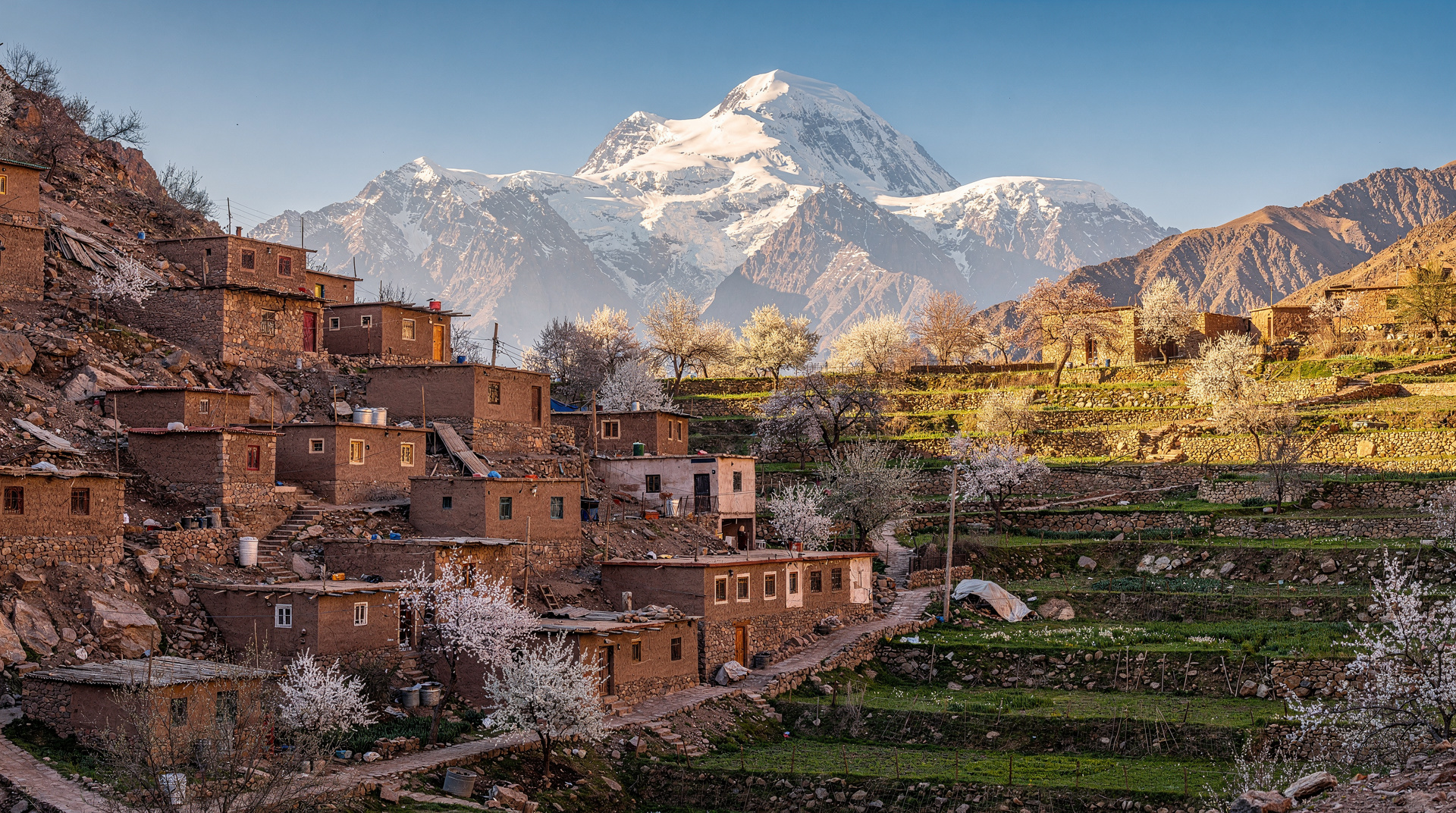
See the dedicated M’Goun trek guide for the full route description. In brief, the traverse crosses the M’Goun River gorges, several villages in the Ait Bougmez Valley (the “Happy Valley,” one of Morocco’s most beautiful agricultural valleys), and a network of high passes. It’s less visited than Toubkal and widely regarded as the more beautiful route by trekkers who’ve done both.
Jbel Siroua: the volcano trek (4-6 days)
Siroua (3,304m) sits between the High Atlas and the Anti-Atlas — technically volcanic in origin and geologically distinct from both surrounding ranges. The trail from Aoulouz (reachable from Taroudant or Ouarzazate) climbs through a landscape of lava flows, juniper forest, and isolated Berber villages that see minimal tourist traffic.
Why it’s worth knowing about:
- Completely uncrowded — a genuine off-the-beaten-track objective
- The approach through the Souss gorge and pre-Atlas terrain is itself a journey
- Saffron cultivation villages (the Taliouine region nearby is Morocco’s saffron capital)
- The summit view encompasses both the High Atlas and the Anti-Atlas simultaneously
Practical note: Less infrastructure than Toubkal — camping is the primary accommodation option, muleteers and guides are arranged through Aoulouz rather than Imlil. Requires more advance planning.
The Ait Bougmez Valley traverse (3-5 days)
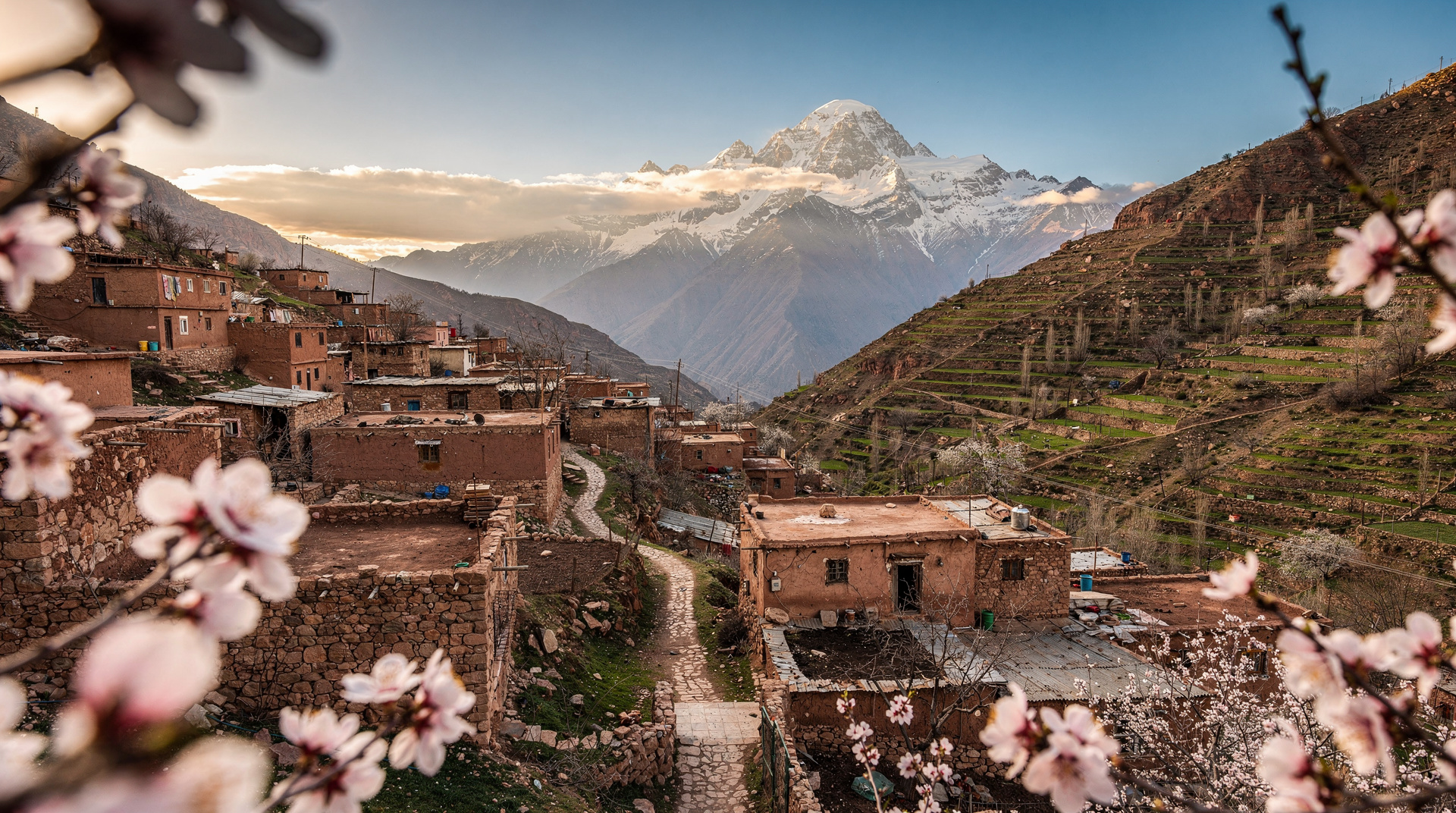
The Ait Bougmez Valley is Morocco’s “Happy Valley” — a broad, fertile agricultural basin at 1,900m surrounded by 3,000-4,000m peaks, accessible from Azilal (2.5 hours from Marrakech). It’s not a summit objective but a valley traversal — walking from village to village through a landscape of walnut orchards, mudbrick villages, and traditional water management systems (the seguias, or irrigation channels).
Format: Start at Tabant (the main village, at the eastern end of the valley), walk west through Agouti, Ifrane, and Ait Oumad over 3-4 days, then cross a pass north or south to connect with another route. Can be combined with M’Goun as a circuit.
Why it’s remarkable: The Ait Bougmez is one of the best examples of functioning traditional Berber agriculture in Morocco. Unlike the Imlil area, which is now heavily tourist-oriented, Ait Bougmez villages retain functional agricultural economies with tourism as a supplement. Walking through it feels genuinely immersive.
Logistics for multi-day Atlas treks
Guides and muleteers
All serious multi-day Atlas treks above 3,000m should be done with a licensed guide. The licensing system for mountain guides in Morocco is run through the Bureau des Guides in Imlil. Licensed guides carry official documentation.
Finding a guide:
- Imlil Bureau des Guides for Toubkal-area treks
- Tabant and Azilal for Ait Bougmez and M’Goun treks
- Online in advance through specialist Morocco trekking agencies. The Atlas Mountains day trip covering 3 valleys and waterfalls from Marrakech — guided full day with transport, from €35pp is a popular intro route that many trekking operators use as a first day before longer circuits
Guide cost: 400-600 MAD per day per guide. An experienced guide knows emergency descent routes, understands weather pattern reading for the specific massif, can communicate in Berber villages, and handles logistics that solo trekkers can’t.
Muleteers: Essential for multi-day treks with camping equipment. A muleteer with mule carries your camping and cooking gear between camps, allowing you to hike with a light daypack. Cost: 200-300 MAD per mule per day plus the muleteer’s food and accommodation. Standard format is guide plus 1-2 mules for a party of 2-4 people.
Accommodation options
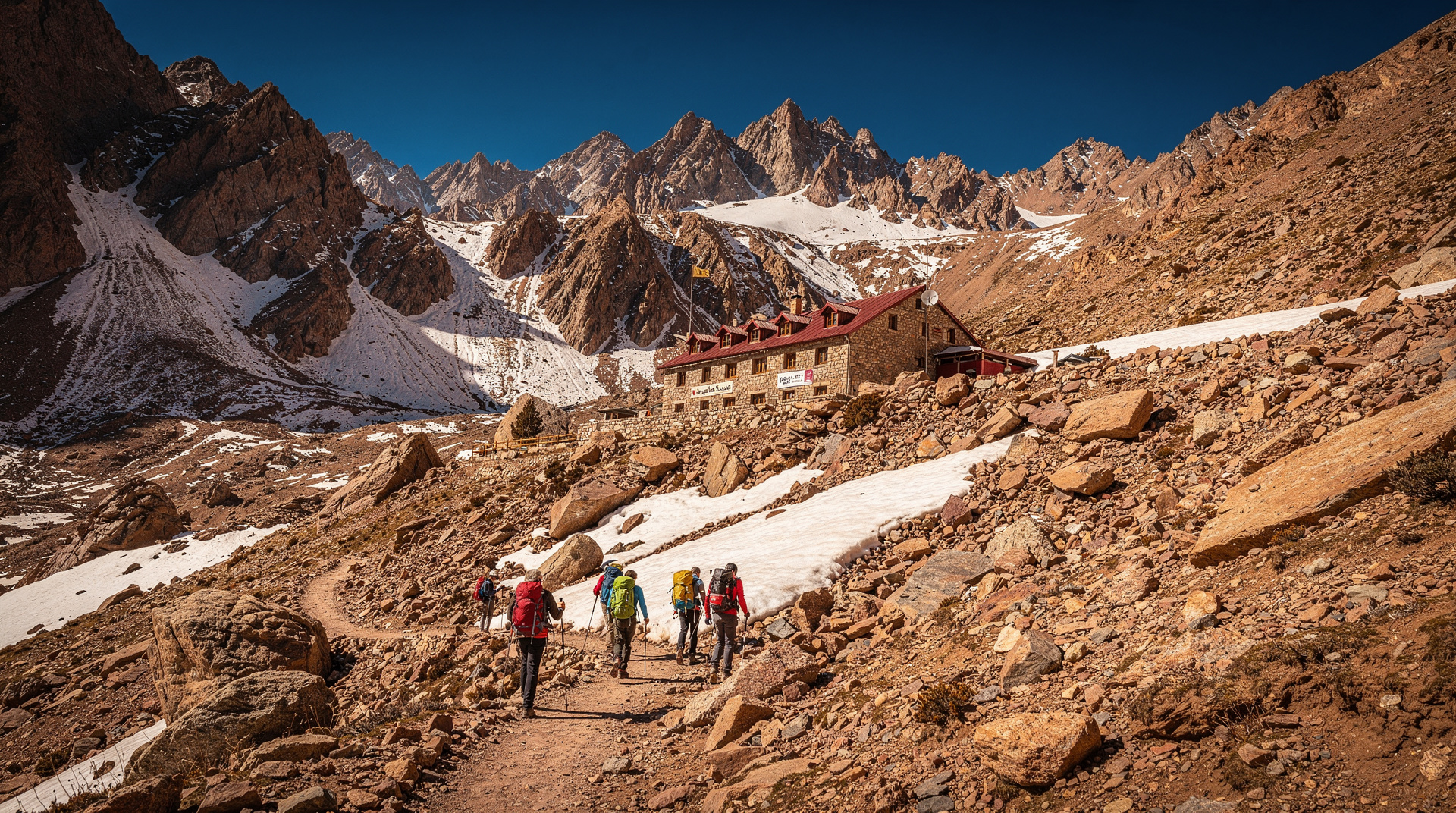
Refuges: The CAF Toubkal Refuge at 3,207m is the main refuge. The Refuge Lepiney (near the summit approach) is a second option. Both require advance booking in peak season.
Azib (summer pasture) huts: At several points on the circuit routes, nomadic pasture huts (azib) are available for trekkers to sleep in. Facilities are minimal (a floor, a roof, sometimes a gas ring for cooking) but the location and atmosphere are exceptional. Your guide arranges access and often knows the shepherds.
Village homestays: The most rewarding accommodation format. Berber families in circuit-route villages accept trekkers (your guide will know which families host regularly). Expect a floor mattress or wooden bed, clean blanket, and a meal cooked over the family hearth. Cost: 150-250 MAD per person including dinner and breakfast.
Camping: Full camping is possible throughout the Atlas outside established camping areas. A lightweight tent adds flexibility. Combined with a muleteer carrying the gear, this is the purest multi-day trekking format.
Food on trek
For guided treks with a muleteer, the mule often carries a cook kit and the guide cooks dinner. A standard multi-day Atlas trek day produces: breakfast of bread, olive oil, and tea; packed lunch of bread, sardines, olives, and fruit; dinner of harira soup, tagine (usually lentil or vegetable at altitude where fresh meat isn’t available), and tea. It’s not culinary adventure but it’s reliable and appropriate.
If you want more varied food, specify this clearly when briefing your guide. A good guide can arrange better meals in village homestays.
Water on trek
Mountain streams in the High Atlas are generally clean but treating water is advisable (Giardia risk from upstream agricultural use). Bring a filter (Sawyer Squeeze or equivalent) or iodine tablets. The CAF refuges provide safe drinking water. Villages usually have a clean water source (tap or spring) that your guide will identify.
Best seasons for multi-day Atlas treks
April-May: Snow still on the highest passes in April; clear by May. The valleys are green and wildflowers are exceptional. Best month for photography in the lower valleys. Some high passes (above 3,500m) may require ice axe in early April.
June: Excellent all-around conditions. Snow-free, manageable temperatures, good visibility.
July-August: Hot below 2,500m. Above 3,000m it’s comfortable. The main trade-off is heat during approach walks and at lower village elevations.
September-October: The optimal window. Settled weather, comfortable temperatures at all elevations, quiet trails, and the best autumn light. October particularly.
November-March: Winter conditions above 3,000m. Multi-day circuits become technical expeditions requiring full winter equipment. The valley-level sections (Ait Bougmez, lower Amsouzart) are walkable in winter but the pass crossings are challenging. Not recommended without winter mountaineering experience.
Budget for a multi-day Atlas trek (2026 reference)
| Item | Daily cost (approx) |
|---|---|
| Licensed guide | 400-600 MAD (40-60 EUR) |
| Muleteer + mule | 200-300 MAD (20-30 EUR) |
| Village homestay accommodation | 150-250 MAD/person (15-25 EUR) |
| Food (guide-cooked) | 150-200 MAD/person (15-20 EUR) |
| CAF refuge night | 250-320 MAD/person |
| Total per person per day (guided, shared group of 4) | 350-600 MAD (35-60 EUR) |
Organised multi-day Atlas trek packages from specialist agencies: 100-200 EUR per person per day all-inclusive, depending on group size and trek standard.
Connecting the Atlas treks to the broader Morocco itinerary
Multi-day Atlas treks work best with 2-3 days in Marrakech before and 1-2 days after. The Marrakech region guide covers the city context. For trekkers who want to test their legs before committing to a 5-7 day circuit, the Berber village and Atlas Mountains day trip from Marrakech — a full guided day through High Atlas villages, from €30pp is the best single-day taster before a longer multi-day commitment.
For travellers combining mountains and desert, the 10-day Morocco itinerary includes a High Atlas + Sahara combination. The 7-day itinerary covers the more compressed version.
For specific summit focus, the Toubkal summit guide has the altitude and technical preparation detail. For the M’Goun alternative, the M’Goun trek guide covers the Eastern High Atlas in depth.
Packing for a multi-day trek
Beyond standard hiking kit, a few items matter more on multi-day Atlas routes than on a single-day summit push: a warm layer for camp evenings (temperatures at 2,500-3,200m drop sharply after sunset even in summer), a headtorch for pre-dawn starts, and blister prevention supplies for the sustained daily mileage. The general Morocco packing list covers the baseline; the winter vs summer packing guide is worth checking if you’re trekking outside the June-October window, since night temperatures at altitude behave more like winter than the valley forecast suggests.
Fitness and altitude preparation
Altitude on these routes is moderate by international mountaineering standards (the highest passes sit around 3,600-4,100m) but still enough to cause mild symptoms — headache, reduced appetite, disturbed sleep — in trekkers arriving straight from sea level. Spending a night in Imlil (1,740m) before starting, rather than driving up and walking directly, gives a small acclimatisation buffer. The Toubkal Refuge night before a summit attempt serves the same purpose on the Circuit. If you’re unsure whether trekking or safety logistics generally are a concern on this kind of trip, the is Morocco safe guide covers the practical risk picture beyond the mountains specifically.
Frequently asked questions about Multi-day Atlas treks in Morocco
Which is better, the Toubkal Circuit or the M’Goun Traverse?
Different in character. The Toubkal Circuit is more logistically straightforward (easier to access, more infrastructure) and includes the highest peak. The M’Goun Traverse is quieter, more remote, arguably more beautiful, and has the Ait Bougmez Valley as a unique element not present in the Toubkal area. Many serious trekkers do both on separate trips.
Can I do the Toubkal Circuit without a guide?
Experienced mountain trekkers with navigation ability and appropriate equipment can complete the circuit independently in summer. Above 3,000m, route-finding requires map and compass competence. The main risks are getting lost in cloud (which can drop rapidly) and missing the village accommodation options (which are unmarked on standard maps). A guide adds safety and cultural access.
Is wild camping permitted in the Atlas?
Generally tolerated if done responsibly — no official prohibition and no meaningful enforcement. Use established spots where possible, bury waste well away from water sources, and take all rubbish out. Your guide will know the appropriate camping locations on any given route.
What’s the minimum fitness requirement for a 5-day trek?
You should be able to walk 15-20km with a 10-15kg pack on varied terrain for 5 consecutive days without major difficulty. If you can do a day hike of 25km without being destroyed the following day, you’re in the range. Specifically, cardiovascular fitness matters more than strength for the high-pass sections.
Do I need trekking-specific travel insurance?
Yes — standard travel insurance often excludes trekking above a certain altitude (commonly 3,000m) or activities requiring a guide. Check your policy covers mountain trekking with a licensed guide up to at least 4,200m, and that it includes emergency evacuation, since the nearest road access from parts of the Toubkal Circuit and M’Goun Traverse can be a full day’s walk away.
Can beginners do a multi-day Atlas trek?
Reasonably fit beginners with no technical mountain experience can manage the 5-day variants with a guide and muleteer, provided they’ve done some hill walking beforehand. The 7-day Toubkal Circuit with the summit day, or the full M’Goun Traverse, are better suited to trekkers who’ve already completed at least one multi-day hike elsewhere.