Morocco with a toddler: the honest family travel review
The question everyone asked us before we went
“Morocco? With a two-year-old? Why?”
This is the question we got from friends, from family, from a man at the airport who overheard our destination and felt moved to weigh in. The subtext was clear: Morocco is chaotic, physically demanding, possibly unhygienic, definitely hot, and full of alleys that are not pushchair-compatible. Why would anyone take a small child there?
I understand the question. I also want to answer it properly, which means starting with honesty: travelling Morocco with a toddler is harder than travelling Morocco without one. It is also, in the ways that matter, more rewarding — not because of any romantic notion that children enrich travel experiences (sometimes they do; sometimes they sit on a perfectly fine museum floor and refuse to move), but because Morocco turns out to be a country that treats small children with a warmth that is genuinely different from anything we had experienced in European destinations.
Here is the full account.
At a glance
| Where | Marrakech + Essaouira, 8 days |
| Child’s age | 2 years 4 months, walking confidently |
| Best season for toddlers | Spring or autumn — see our best time to visit guide |
| Accommodation | Riads with a courtyard (and a pool, if travelling in summer) |
| Getting around | Stroller part-time + carrier for uneven medina sections |
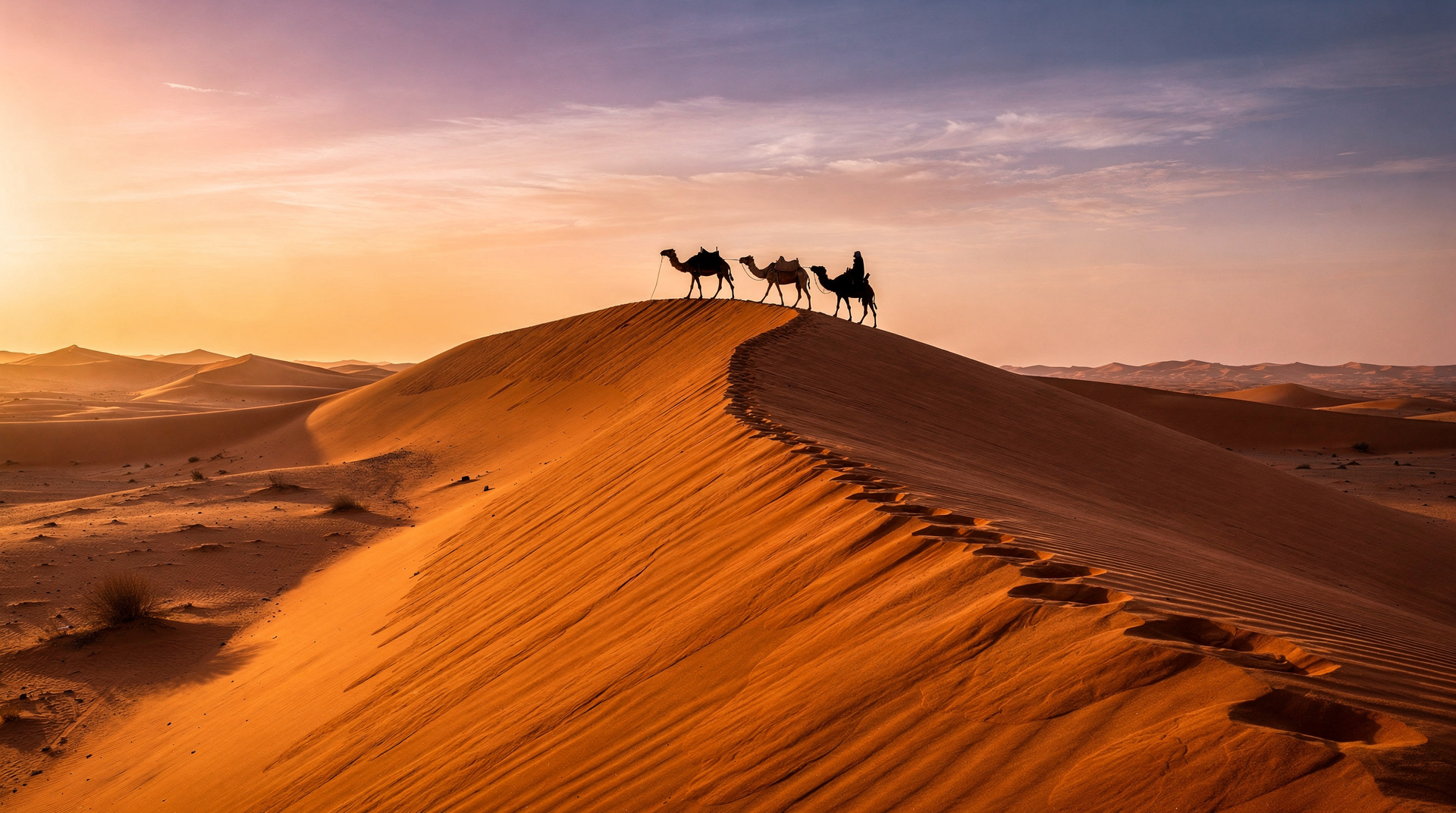
| Sahara / desert trip | Skipped — right call for a toddler on a trip this length |
Our trip structure
We did eight days: three nights in Marrakech, two nights in Essaouira, two nights back in Marrakech, one night transit. Our daughter Zoé was two years and four months old. She walks confidently but not always fast, naps once a day reliably, eats basically anything, and has a tolerance for heat that is better than her parents’. These characteristics shaped everything.
We stayed in riads in both cities. We did not rent a car. We did not do any desert trip. We did not do the Sahara. These are the right decisions for a toddler trip of this length, and I will explain why.
What Morocco does well for children
The cultural warmth toward small children is real. I had read this in other accounts and was sceptical — it sounded like the kind of thing parents tell each other to justify decisions other people find questionable. It is real. In eight days in Morocco, Zoé was held by shopkeepers, offered biscuits by café owners, photographed extensively by local women who found her delightful, and greeted in every restaurant as if her arrival was the best part of the evening. This is not performance. Moroccan culture genuinely centres children in its social structures, and travelling with one unlocked interactions with locals that would not have happened without her.
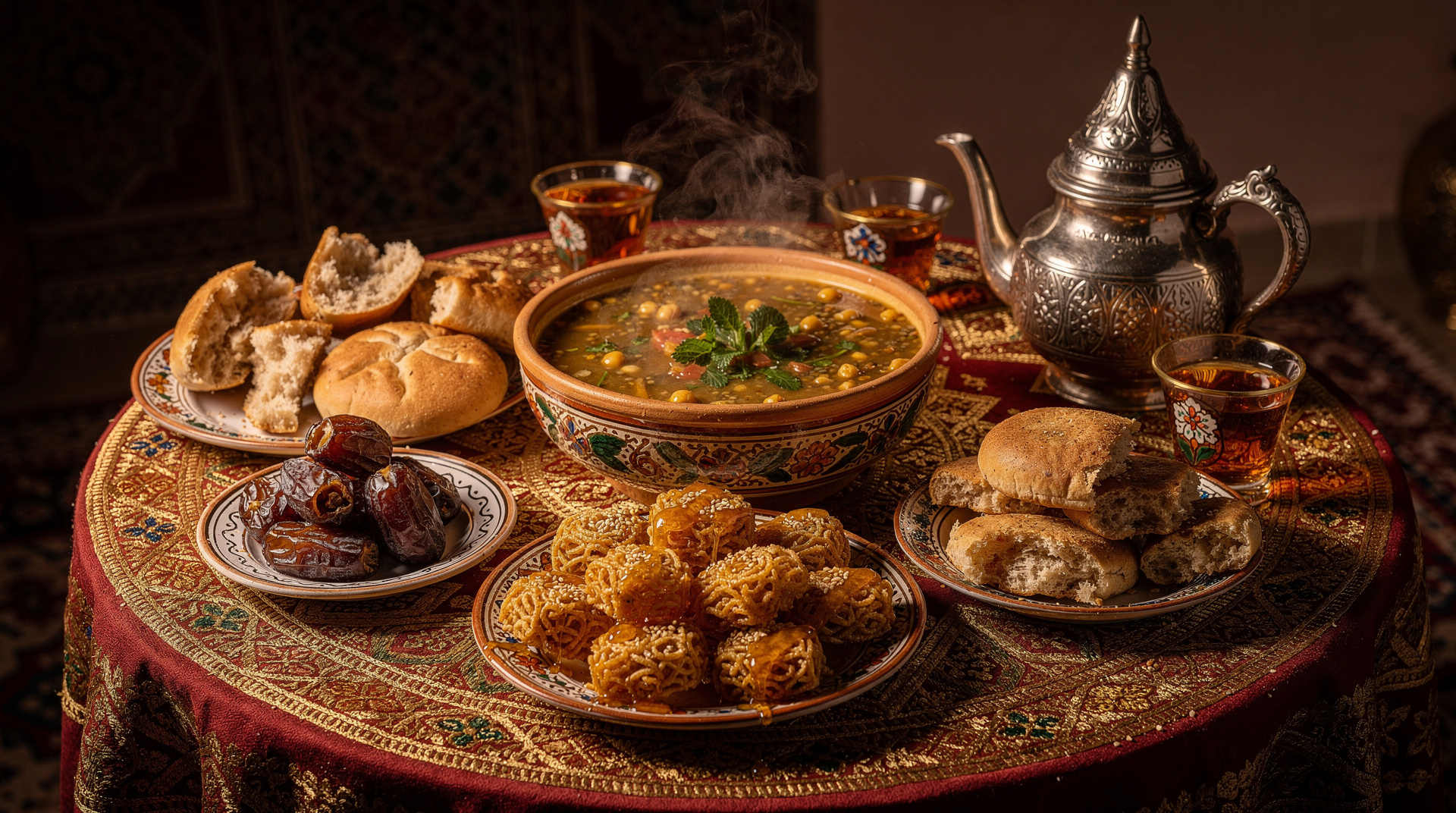
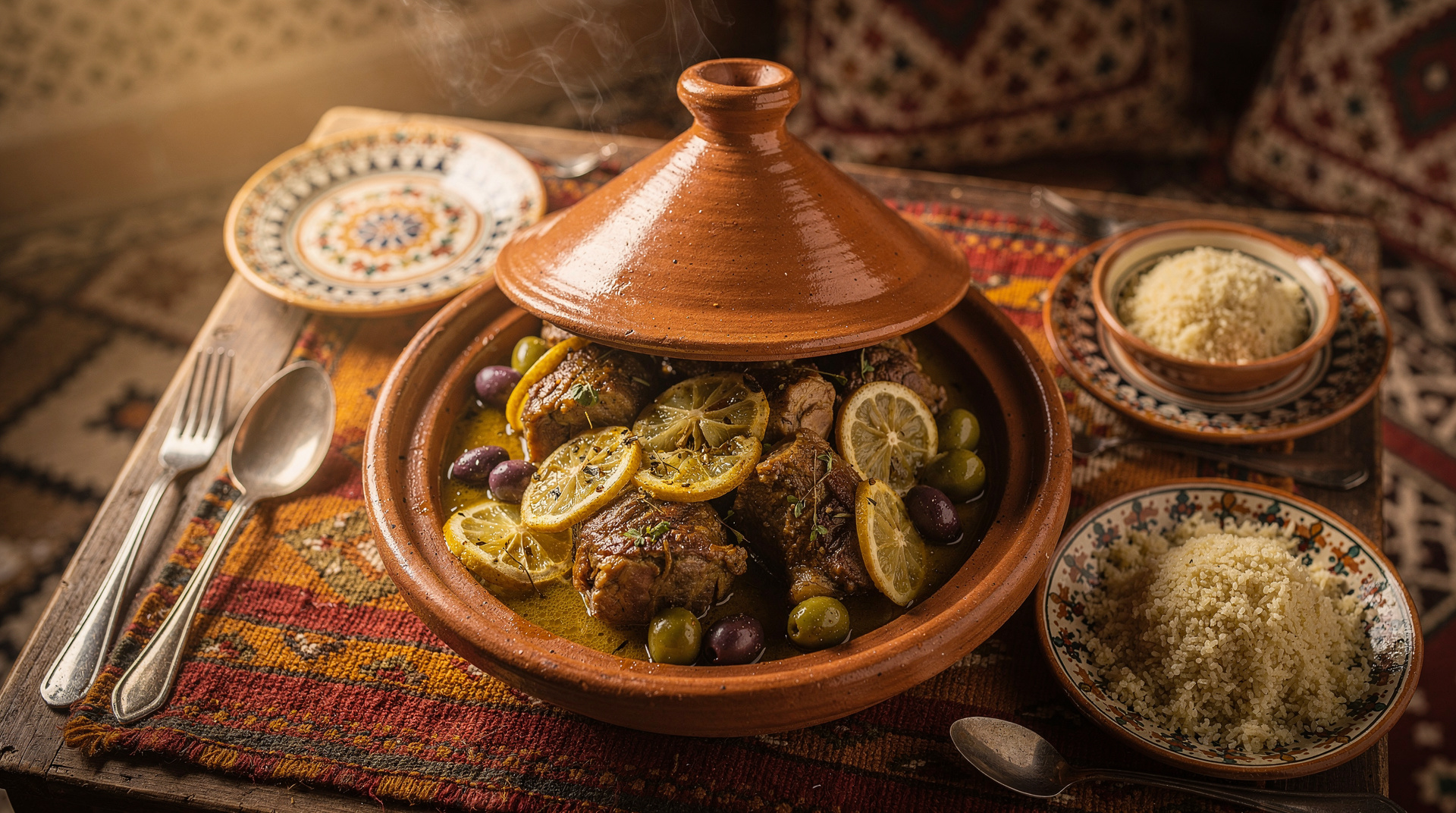
The food is toddler-friendly. Tagines with chicken and vegetables, khobz bread, rice dishes, couscous, pastilla, fresh fruit and juice everywhere — Moroccan food is not spiced at a level that excludes small children. Zoé ate couscous royale (lamb, chicken, and vegetables over hand-rolled semolina) at a Marrakech restaurant and consumed more of it than I did. The street food is generally safe if you choose well: we stuck to freshly cooked grilled items and avoided raw salads for her specifically.
Riads are genuinely good family accommodation. The interior courtyard structure of a riad — which is to say, a contained outdoor space at the centre of the building — is a toddler’s playground. Every riad we stayed in had a tiled courtyard with a fountain that Zoé treated as personal property. The staff, in both riads, were warm with her in the way that Moroccan people generally are with small children.
Moroccans are patient with strollers in ways that surprise you. I expected the narrow medina alleys to make the stroller impossible. They are narrow — many are under two metres across — but Moroccans navigating with laden donkeys and bicycle carts are accomplished at making way, and locals would often move obstacles or offer help when we were navigating a particularly difficult passage. We used the stroller in Marrakech about half the time and Essaouira almost all the time (the Essaouira medina is wider and more stroller-compatible).
What was hard
Heat management. We went in late June. Marrakech in late June averages 37°C. The answer to this is: go in April, May, September, or October. We did not, for work scheduling reasons, and paid the price of a toddler who wilted at 1 pm every day and needed two hours in the riad before she could function again. The afternoon shutdown this imposed turned out to be fine — it matched the riad’s natural rhythm and gave us quiet time — but the heat itself was genuinely taxing on her. Essaouira was meaningfully cooler because of the Atlantic wind and would be my recommended base for a hot-weather family trip.
The medina alleys of Marrakech are not all stroller-compatible. Parts of the medina — particularly around the souks and the area between Jemaa el-Fnaa and the Mouassine — involve uneven, ancient paving, steep steps, and sudden level changes that make stroller navigation difficult. We wore her in a carrier for these sections and folded the stroller. This worked fine but required planning: we did not spontaneously head into the souk. We planned routes.
Restaurant timing. Moroccan dinner culture runs late — locals eat at 8 or 9 pm, and the best restaurant atmosphere is usually after 8 pm. With a toddler who needs to eat at 6 pm and sleep by 8 pm, this is structurally incompatible with the ideal restaurant experience. We ate early (6:30 pm) at less atmospheric hours, left before the evening hit its stride, and accepted this as the cost. Good riads accommodate early dinners without complaint; lower-quality tourist restaurants are sometimes impatient at off-peak times.
The first day adjustment. Zoé took her first 24 hours in Marrakech to calibrate. The noise, the smell, the visual intensity of the medina — all of it was more than she had encountered before, and she spent part of the first day close and quiet. By the second day she was navigating with enthusiasm. This is not a problem, just a fact to plan for: do not put your most demanding experience on day one.
What we would do differently
Go in October, not June. The temperature difference (22°C in October versus 37°C in June) is the single change that would have made the most difference to the trip.
Start in Essaouira, not Marrakech. We did Marrakech first and then Essaouira. I would reverse this. Essaouira is gentler, cooler, with a manageable medina that a toddler can explore without being completely overwhelmed. Starting there, calibrating, and then arriving in Marrakech with your bearings already set would have been smarter.
Three nights minimum per city. Eight days across two cities was roughly right. We could not have added more cities — the packing and unpacking involved with a small child makes every transition expensive in time and energy. Two city bases, each with three or more nights, is the right structure for toddler travel in Morocco.
Book a riad with a private pool. For a June or July trip, a riad with a pool is not a luxury, it is a necessity. The afternoon heat requires somewhere to put a toddler that is cool, entertaining, and safe. Some riads in Marrakech have private plunge pools; others have shared pools. Book specifically for this feature.
The places that worked best
Essaouira for daily life: Wide medina, sea breeze, flat Atlantic beach that a toddler can run on safely, fish lunch at the port stalls (Zoé ate grilled sardines without complaint), and a generally calm pace. The surf lesson was obviously not for us, but the beach itself was perfect. Our Essaouira destination guide has family accommodation recommendations.
The Majorelle Garden in Marrakech for mornings: Opens at 8 am, most beautiful before the crowds arrive at 10 am. Zoé found the cacti overwhelming and exciting simultaneously. The café at the garden serves good fresh juice and a reasonable breakfast. The Berber Museum inside was briefly interesting to her before the concentration required by museum-going exceeded her current developmental capacity.
The Majorelle Garden, YSL Museum, and Berber Museum combo ticket bundles entry to all three — worth having sorted in advance to avoid the box office queue with a two-year-old in tow.
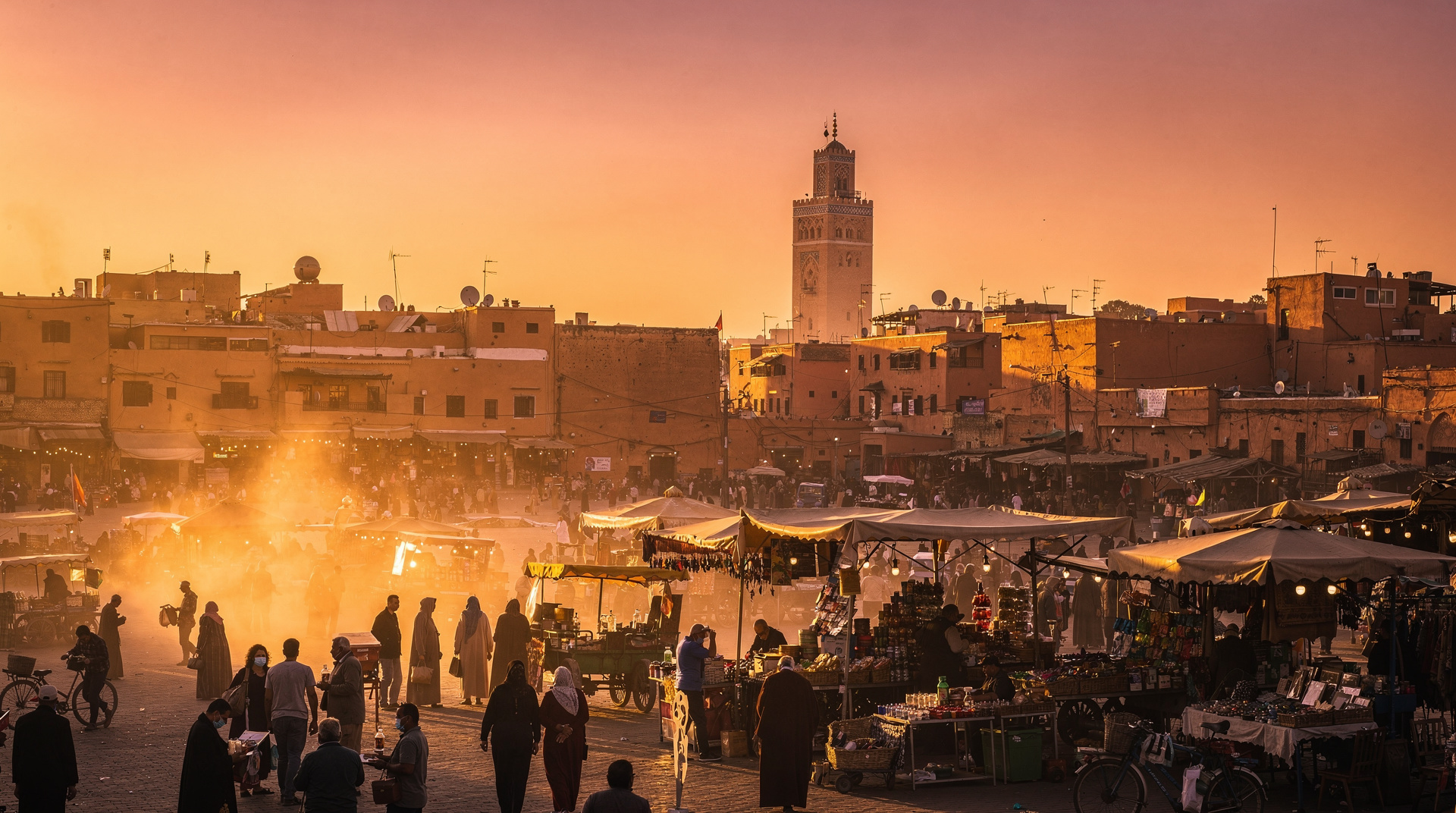
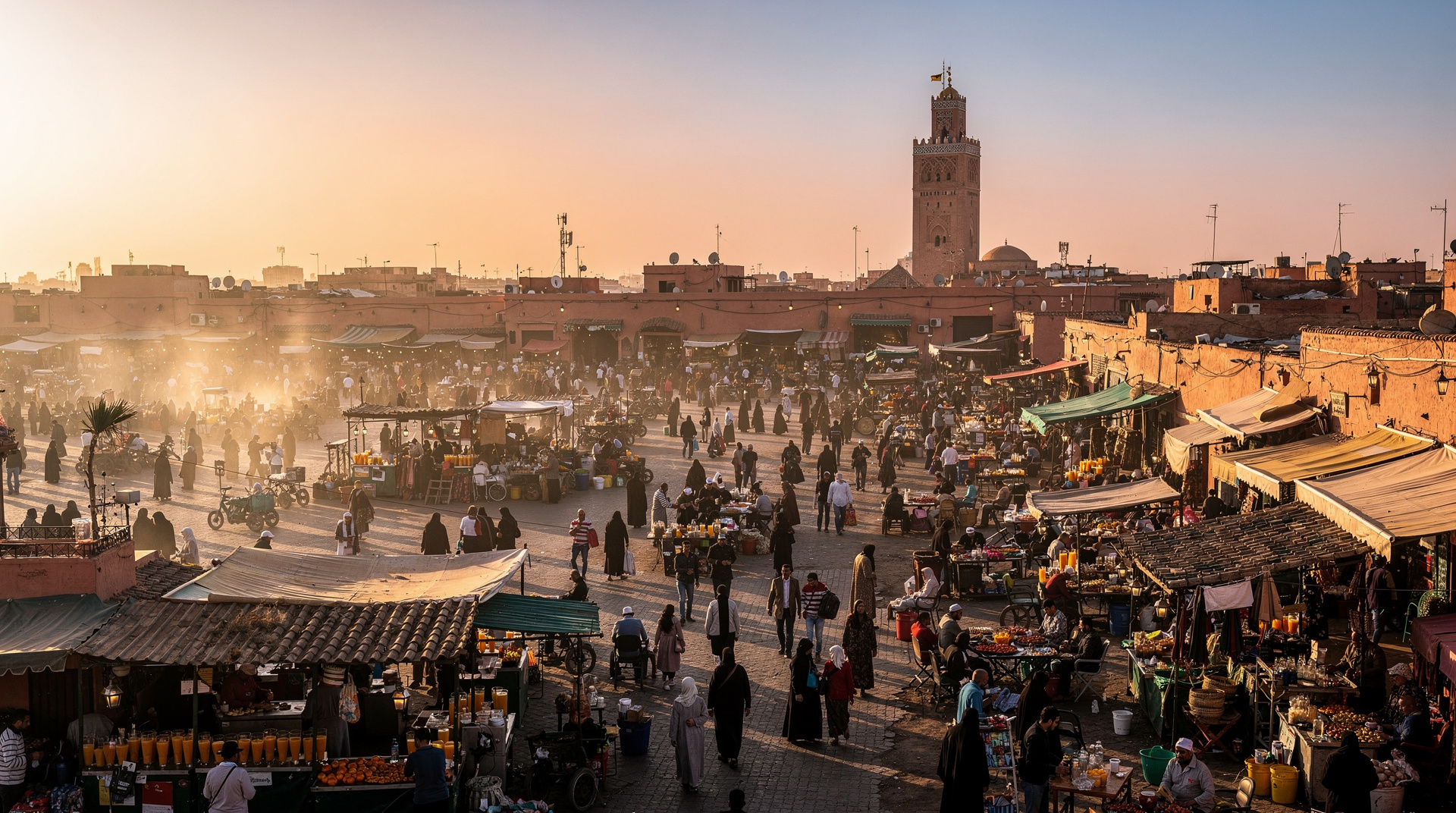
The Jemaa el-Fnaa food stalls for evening: We put Zoé in the carrier and walked the evening food stalls at 7 pm. She found the smoke, the colour, and the noise fascinating. We ate orange juice and briouats (stuffed pastry parcels) while she watched the Gnawa musicians. This worked better than any restaurant meal we had in the city.
The beach south of Essaouira medina: Five km of flat Atlantic sand, minimal tourists, driftwood, waves visible but far enough out to be safe for a walking toddler. We spent two mornings here. She collected small rocks. This is not a Morocco-specific activity but it was the best two mornings of the trip.
Packing and health notes that mattered more than we expected
We over-packed medicine and under-packed sun protection, which is the wrong way round for a Morocco trip with a toddler. A wide-brim hat, high-SPF sun cream, and a portable fan for the riad room did more daily work than anything in our medical kit. We carried oral rehydration sachets (useful once, for a mild bout of heat fatigue rather than anything stomach-related) and stuck to bottled water for her at all times, including for teeth-brushing. Our Morocco packing list is written for adults but the sun and hydration advice applies even more to a small child.
On the family-travel logistics side more broadly — car seats, stroller-friendly bases, riad vetting for young kids — our family travel in Morocco guide and the dedicated Morocco with kids guide cover ground this post does not, including options for children older than toddler age where the calculus (Sahara trips, longer hikes) shifts considerably.
Would a nanny or babysitting service have helped?
We did not use one, but several riads in Marrakech and Essaouira can arrange a vetted babysitter for an evening, which would have solved our restaurant-timing problem entirely: an early dinner for Zoé at the riad with a sitter, followed by our own dinner at a proper hour. If we go back before she starts school, this is the change I would make — not to a route or a season, but to this one piece of logistics.
The honest verdict
Would we go back to Morocco with a young child? Yes. Would I recommend it to someone with a three-month-old or an infant who does not yet walk? Probably not — the logistics of the medinas are specifically hard for pushchairs, and the heat management is difficult for very young children. For toddlers who walk, eat flexibly, and tolerate noise, Morocco is genuinely manageable and, in the specific warmth it shows toward small children, surprisingly hospitable.
The trip required more planning than our child-free Morocco trips. Every transit was slower. Every afternoon was blocked by the nap. Every restaurant meal was earlier and shorter than we would have chosen. These are the costs of family travel, not Morocco-specific costs, and they are entirely worth paying for the experience of watching a small child discover that the world is much stranger and larger and more beautiful than her previous experience of it would suggest.
Zoé still talks about the cats in the Fes medina, which she did not visit (she conflates riads and medinas as a single category). She calls them “the riad cats.” There were indeed riad cats. They were excellent. She is not wrong.
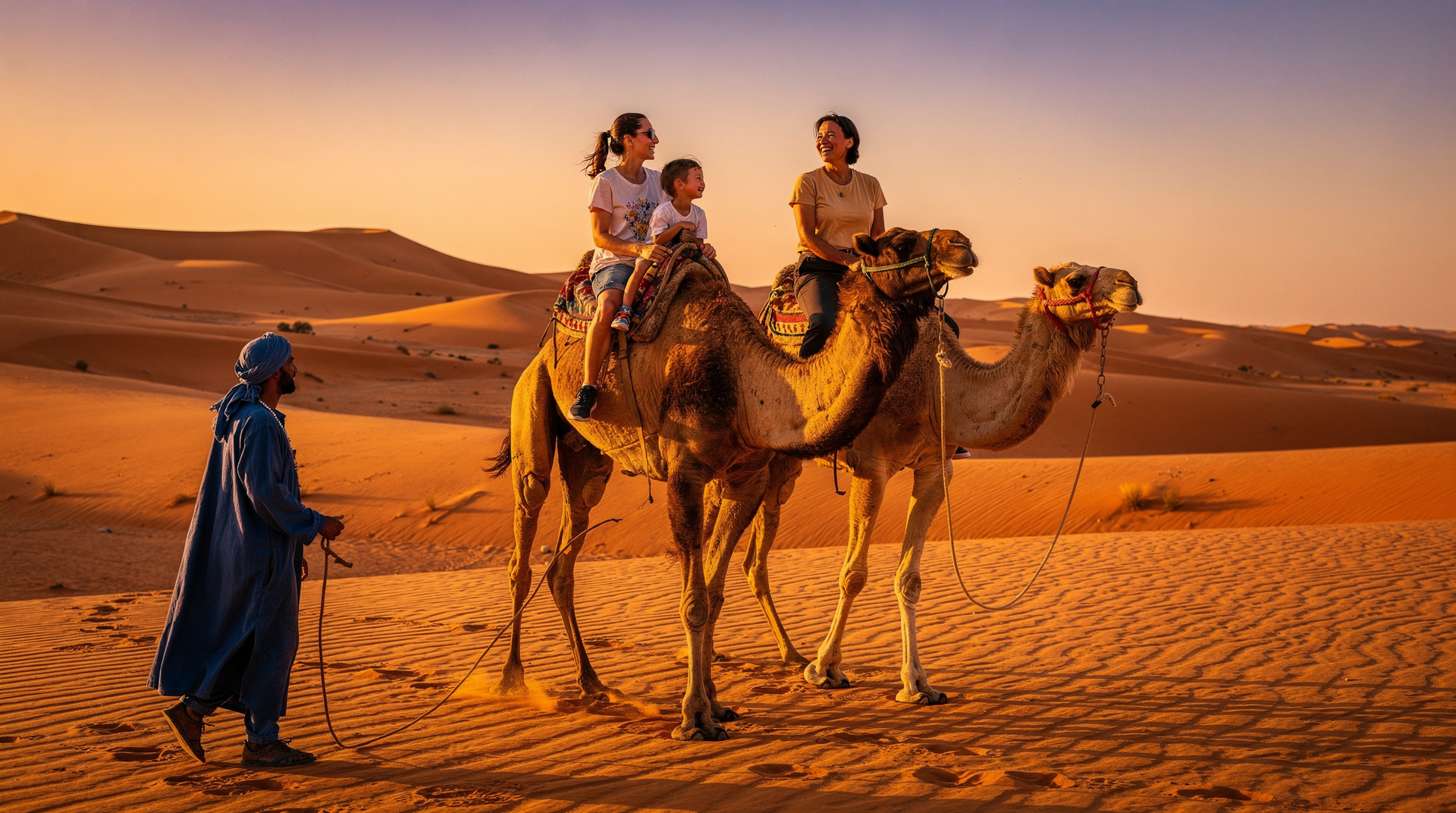
For families wanting to add a structured activity to the Marrakech days, the Palmeraie camel ride at sunset is consistently well-rated for families — short enough for a toddler’s attention span, visual enough to be genuinely exciting, and outside the chaotic medina core.
Our family travel guide for Morocco has comprehensive advice on timing, accommodation, and the specific logistics of travelling with children of different ages.
Frequently asked questions about Morocco with a toddler
Is Morocco safe for toddlers? Yes, in the sense that matters most to parents: crime risk is low and Moroccan culture is unusually warm toward small children. The real risks are heat and dehydration, and uneven medina paving for stroller users — both manageable with the planning described above.
Do I need travel vaccinations for a toddler going to Morocco? Check with a travel health professional or GP well ahead of the trip, since recommendations depend on your child’s existing vaccination schedule and the specific regions you plan to visit; this is not something to decide from a blog post.