Ranking Moroccan classics from tagine to pastilla — with hot takes
Setting myself up for angry comments
Every food-obsessed traveller who spends serious time in Morocco develops opinions about its dishes. Strong opinions, often. Opinions about which tagine is better than which other tagine, whether couscous deserves its prestige, and whether the tourist restaurants in the Marrakech medina are serving a simulated version of the country’s cuisine while the real thing hides in residential kitchens and Friday lunch tables.
What follows is my honest ranking of the canonical Moroccan dishes, after a combined four months spread across seven visits. I am aware this will offend people. I am told this is what comments sections are for.
The ranking goes from the most overrated to the most underrated, which means starting at the top (the things everyone loves and says are transcendent) and working toward the things fewer people talk about but should eat immediately.
At a glance
| Street-stall dishes | Harira, kefta tagine, tangia — often 5-60 MAD |
| Restaurant classics | Tagine, pastilla, couscous — typically 60-150 MAD |
| Timing matters | Couscous is a Friday dish; mrouzia is a Eid dish; harira peaks during Ramadan |
| Where to start | Marrakech for tagine, pastilla, and tangia; Fes for Friday couscous |
| Best guided intro | A street food tour or cooking class if you don’t want to trial-and-error the stalls yourself |
The ranking
1. Tagine chicken with preserved lemon and olives — correctly famous
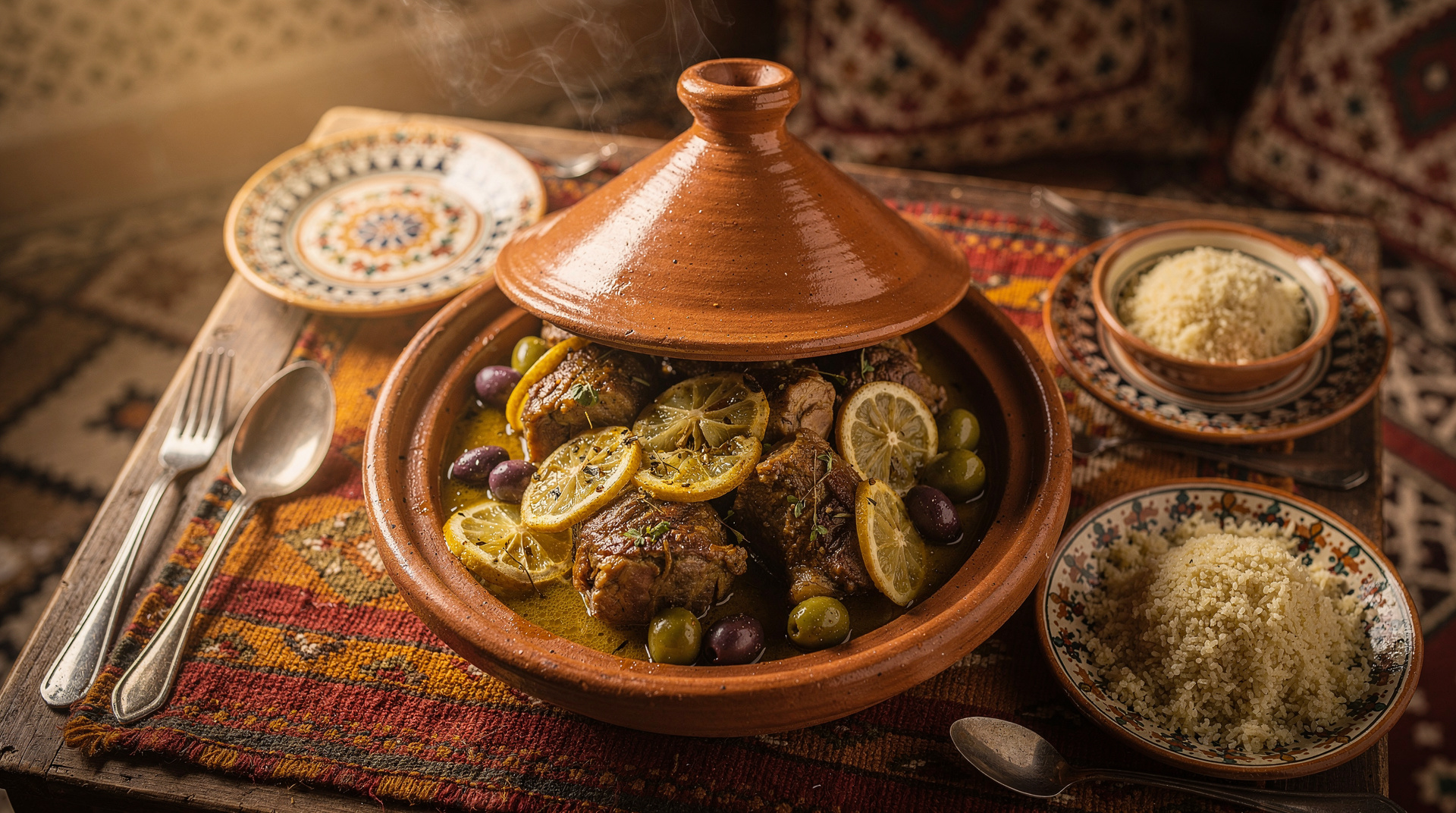
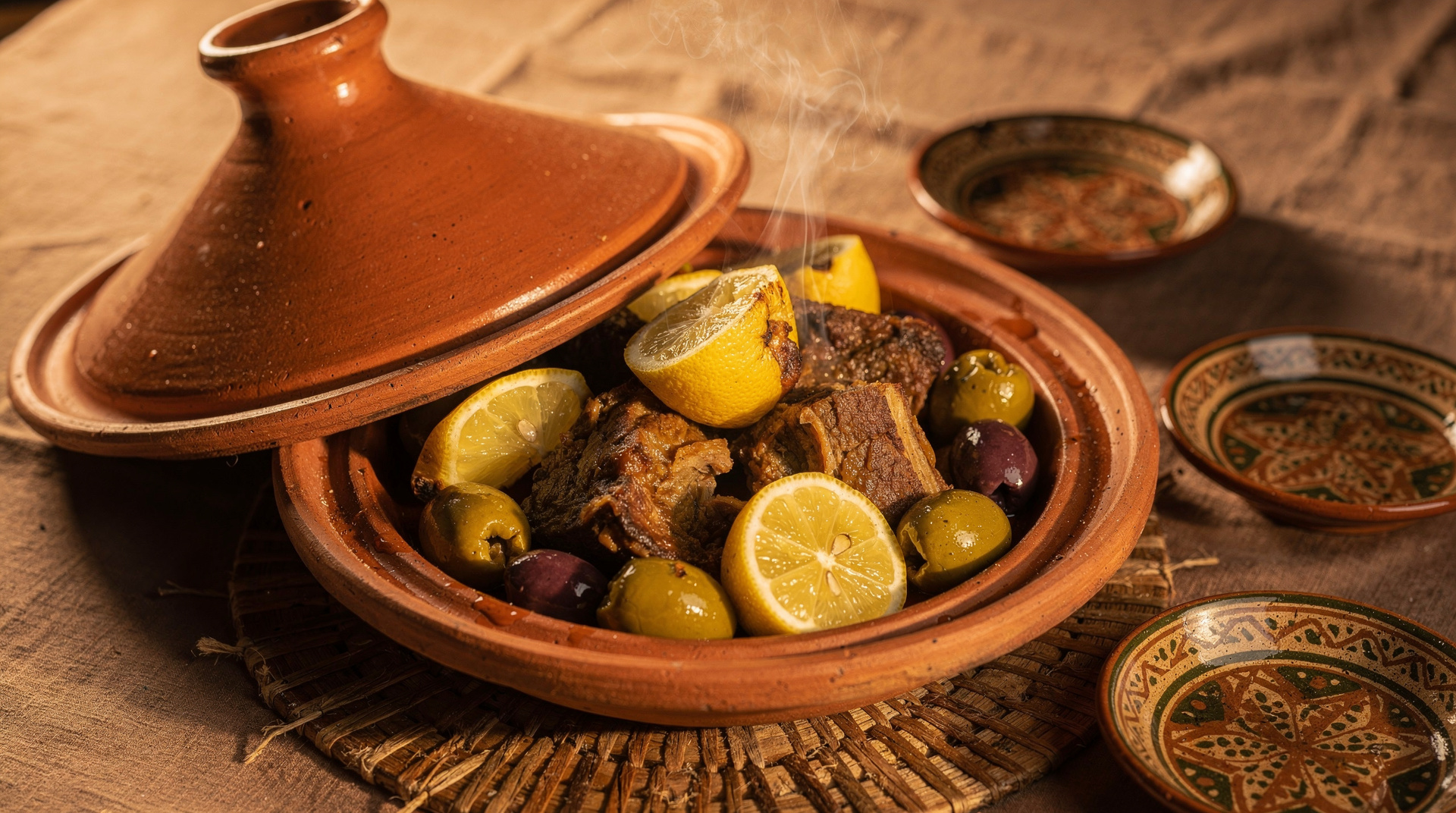
I will start by defending the most obvious thing. Tourist restaurants in Morocco charge you 80–120 MAD for a chicken tagine that may have been prepared by someone who has made it roughly five thousand times over a lifetime. It is, very often, genuinely excellent. The preserved lemon — confit in salt until the rind softens and the bitterness rounds into something deeply savoury — does something to a chicken that no other technique I know of replicates. The olives, cooked down until they absorb the sauce, are another thing entirely from olives at a tapas bar.
Is this dish better at a local home than at a tourist restaurant? Overwhelmingly yes. But even the tourist restaurant version, at its decent baseline, is worth eating. Correctly famous. No controversy here.
2. Harira — the most underappreciated dish in Morocco
This is the hot take I will defend most vigorously. Harira is a thick, lemon-brightened, tomato-based soup with chickpeas, lentils, lamb or beef, fresh cilantro and parsley, and a quantity of black pepper that builds slowly from the first bowl. It is the Iftar opener during Ramadan. It is available at street stalls in the medinas for 5–10 MAD per bowl. It is substantially more delicious than anything its tourist profile would suggest.
The problem is that harira is inextricably associated with cheapness and accessibility in Morocco. It costs almost nothing at a street stall. This leads visitors to rank it below the “special occasion” dishes — the pastilla, the mrouzia, the tangia — when it should be considered alongside them. A properly made harira at Iftar in a Ramadan Fes medina, drunk from a clay bowl while the prayer call fades, is one of the top five food experiences Morocco offers. Full stop.
3. Pastilla — the most extraordinary thing on the menu
Pastilla (or b’stilla, or bisteeya — spelling it is a whole argument of its own) is a layered pie of warqa pastry — thinner than filo, made in a completely different way — filled with pigeon (traditionally), onion, hard-boiled eggs, fried almonds, and saffron, then dusted with powdered sugar and cinnamon. The combination of savoury, fatty, and sweet within the same pastry crust is one of the most sophisticated flavour combinations in any cuisine.
The problem is that the pigeon is often replaced with chicken in tourist restaurants (pigeon is traditional but laborious), and that the warqa pastry itself requires skill to make properly that many establishments do not have. A bad pastilla — stodgy, thin on filling, heavy on sugar to compensate — is actively disappointing. A great one, at a Fes institution like Dar Roumana or at a serious Marrakech riad that makes its own warqa, is genuinely one of the great dishes of the world.
Seek it specifically. Do not accept the first menu version. Ask your riad host where they would eat it.
4. Couscous — badly misunderstood by tourists
Hot take: the couscous you eat at a tourist restaurant in Morocco is not really couscous. It is hand-rolled semolina that has been steamed twice, dressed in vegetable and meat broth, piled with seven vegetables and a shank of slow-cooked lamb. This sounds like what couscous is. But the couscous you eat at a Moroccan family table on a Friday — which is the only day of the week when many traditional households eat it — is something categorically different from the couscous I have eaten anywhere else.
The problem: tourists order it Monday through Sunday without knowing it is a Friday ritual, receive what the restaurant can make on demand (resteamed from a previous batch), and wonder what all the fuss is about. If you are in Morocco on a Friday, find a restaurant that does serious Friday couscous and order it then. This is when it is made from scratch and served with the ceremony it deserves. Our Moroccan food guide has specific restaurant recommendations for each city.
5. Tangia — the Marrakech dish tourists almost never eat
Tangia is Marrakech’s singular contribution to Moroccan cuisine and it is, inexplicably, rarely on tourist restaurant menus. The dish — lamb slow-cooked for hours in a clay amphora with preserved lemon, saffron, cumin, and smen (aged butter) — is traditionally cooked by men who bring their filled amphora to the hammam furnace master (the fakhkhar) and collect it four hours later, fully cooked. It is, architecturally, a meal made by community and fire.
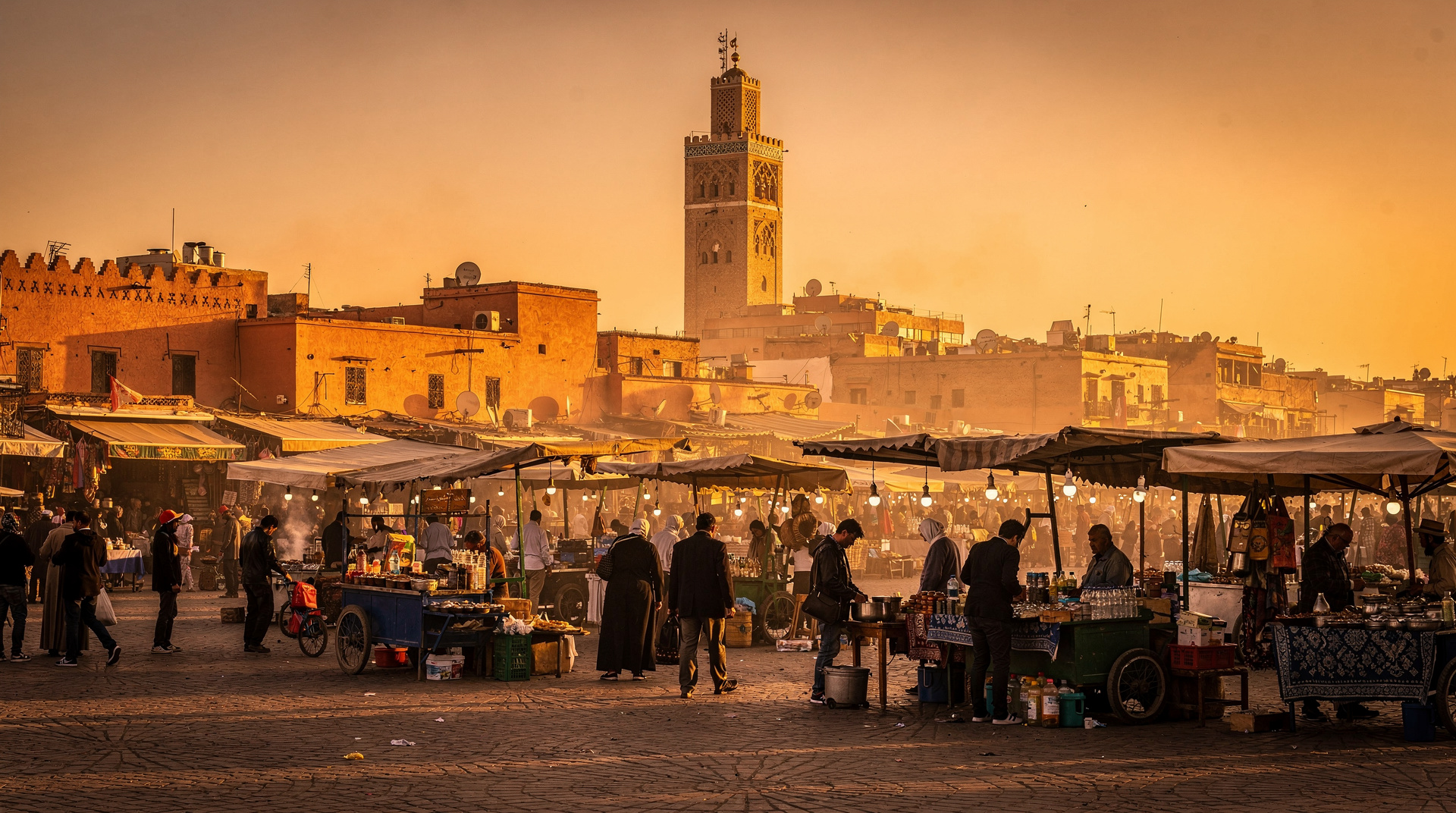
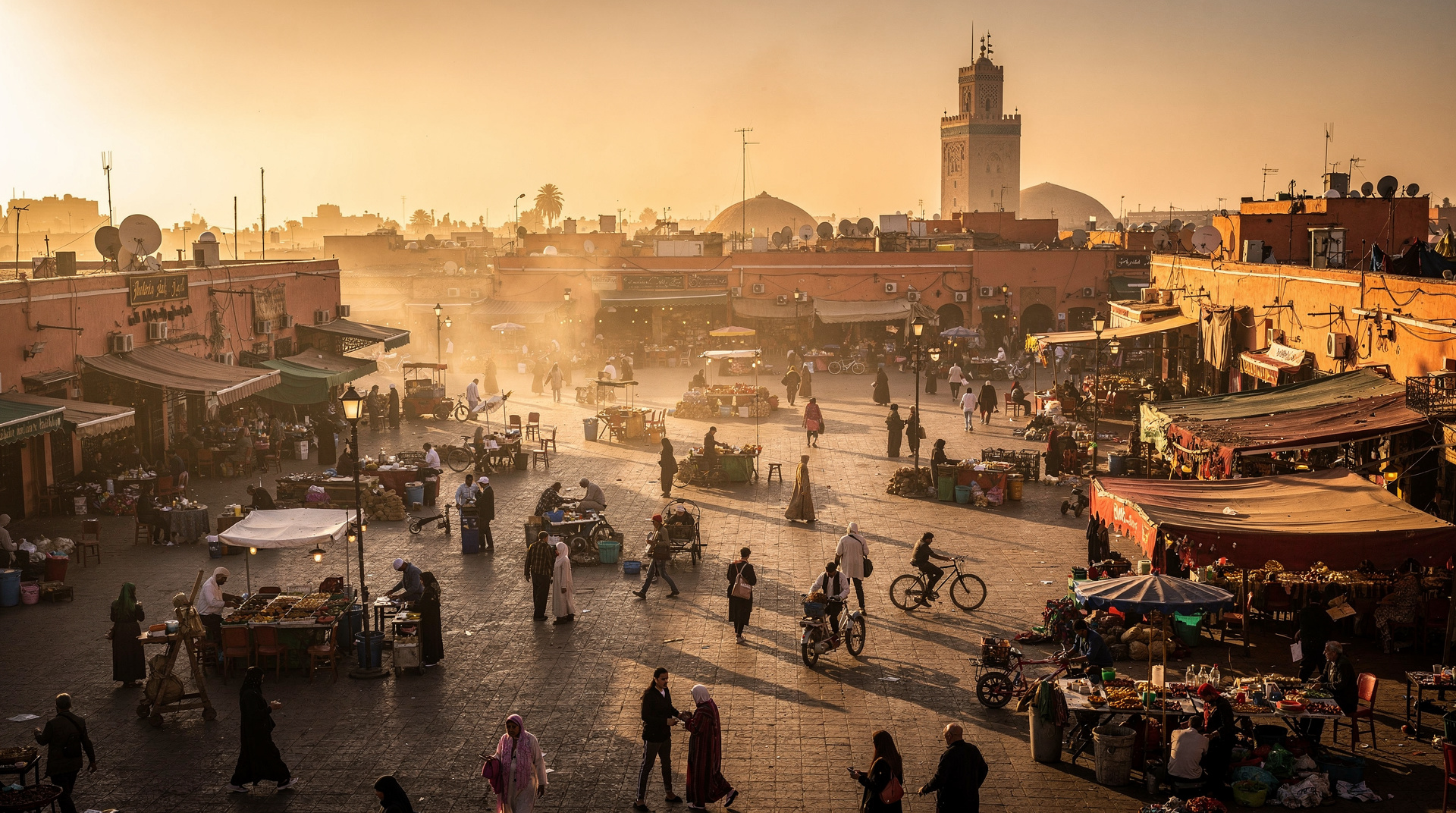
You can find tangia at the Jemaa el-Fnaa food stalls and at a handful of specialist restaurants in Marrakech that cater primarily to locals. It is deeply savoury, intensely perfumed with saffron, and unlike anything else I have eaten in Morocco. It is also rarely something tourists ever encounter because nobody promotes it and it does not photograph with the visual drama of a tagine.
Eat this before you leave Marrakech. Ask for it specifically.
6. Mrouzia — a festival dish that punishes the calendar
Mrouzia is a honey-and-ras el-hanout lamb tagine traditionally made at Eid al-Adha with the meat from the holiday sacrifice. The lamb is cooked until falling off the bone, enriched with honey and golden raisins, perfumed with a spice blend that can contain up to thirty spices — saffron, mace, cinnamon, dried rose petals, cubebs, turmeric, and a dozen others. It is impossibly rich. It is not a dish you eat lightly.
The difficulty for tourists: mrouzia is genuinely seasonal, prepared by households for Eid and often not available in restaurants outside that period. When you do find it — some traditional restaurants in Fes and Marrakech keep versions year-round — it is worth treating as an event, not a menu item. Order it with two people and share. Eat it at midday when you have the afternoon to recover.
My take: mrouzia is the most technically accomplished dish in the Moroccan canon. The spice balancing required to get ras el-hanout right — complex enough to be interesting, harmonious enough not to fight itself — is a lifetime of kitchen skill. When it is great, it is irreplaceable.
7. Rfissa — the dish only local celebrations give you
Rfissa is poached chicken over a bed of msemen (layered flatbread) and lentils, in a spiced broth with fenugreek and ras el-hanout. It is traditionally served at celebrations — a newborn’s seventh day, post-wedding meals — and almost never at tourist restaurants. Which means most visitors to Morocco have never eaten it.
This is a shame because rfissa is one of the most comforting things the country produces. The msemen absorbs the broth slowly as you eat, becoming something between bread and porridge. The fenugreek adds a distinctive slightly bitter edge that anchors the sweetness of the chicken. The whole thing is deeply warming in a way that feels nutritionally and emotionally complete.
If you are invited to eat at a Moroccan family celebration, rfissa may appear. Accept immediately.
8. Kefta tagine — the reliable daily pleasure
Kefta — spiced meatballs of lamb and beef — cooked in a tomato-and-harissa sauce with eggs cracked in at the end, served directly in the tagine with khobz bread to scoop it. This is what I eat when I want dinner to be fast, certain, and satisfying. It is not the most dramatic Moroccan dish. It is the one I have eaten most often.
At a decent street restaurant in any Moroccan city, kefta tagine costs 40–60 MAD and takes twenty minutes. It is essentially the Moroccan version of a reliable pasta dish — the thing you know will be good even when you are too tired to think carefully about the menu.
9. Seafood pastilla — the coastal variation nobody talks about enough
The Essaouira and Casablanca invention: pastilla built not around pigeon but around shrimp, vermicelli, and herbs. It sounds wrong if you are a pastilla purist (pigeon or nothing). It is not wrong. The seafood version has a completely different character — lighter, brighter with the herbs, still wrapped in the same extraordinary warqa pastry — and it represents exactly the kind of creative fusion that coastal Morocco does when it applies its pastry tradition to Atlantic ingredients.
Essaouira is the place to eat this. Multiple restaurants on the ramparts make good versions. Ask specifically for seafood pastilla, or la pastilla aux fruits de mer, and do not accept a menu where it is not properly made.
The actual hot takes, in summary
- Harira is the best dish in Morocco and it costs 10 MAD at a street stall. This should embarrass the expensive restaurants.
- Couscous on a Tuesday is a waste of the dish. Friday or nothing.
- Tangia is the most interesting Marrakech food and tourists almost never eat it because no one markets it.
- The tourist tagine is often fine. The “it’s never as good as a local kitchen” discourse is true but unhelpful to someone visiting for ten days.
- Pastilla is the most technically demanding Moroccan dish and the gap between a mediocre and a great version is wider than for any other dish in the canon.
- Rfissa is underselling itself by only appearing at celebrations. Someone should open a rfissa restaurant.
Where to eat all of this
Our Moroccan food guide has specific restaurant recommendations by city. The short version: for tagine and pastilla in Marrakech, look toward the Mouassine neighbourhood. For couscous in Fes, ask locals which restaurant they use on Fridays and go there specifically. For harira anywhere, look for a street stall with a clay pot and a queue of locals.
For tangia, ask your riad host in Marrakech to help you find the right specialist restaurant. They will know. They all know. They are just waiting to be asked.
If you want a structured introduction to Marrakech’s street food rather than wandering alone hoping to find the right stalls, the Marrakech street food tour by night covers Jemaa el-Fnaa and the surrounding lanes with a guide who knows which stalls are actually good — useful for first-timers who don’t want to use trial and error.
Fes has a comparable option: the Flavours of Fes market visit and cooking class goes deeper — you source the ingredients, you make the dish, you eat it.
Seasonality: what to prioritise, and when
| Season/timing | What to prioritise |
|---|---|
| Fridays, any city | Proper Friday couscous, made from scratch — do not order it on other days |
| Ramadan | Harira at Iftar, ideally in a Fes medina; see our ramadan food guide for the full seasonal picture |
| Eid al-Adha | Mrouzia, if you can find a restaurant that keeps it year-round outside the holiday itself |
| Any day, coastal | Seafood pastilla in Essaouira — a genuinely different dish from the pigeon version |
| Any day, Marrakech | Tangia, asked for specifically — it rarely appears on tourist menus unprompted |
Where to eat well without guesswork
If you would rather not trial-and-error your way through Marrakech’s food stalls, our street food in Marrakech guide maps the reliable stalls by neighbourhood, and the cooking classes in Marrakech guide covers hands-on options if you want to learn the technique behind the tagine and pastilla rather than just eat them. Fes has equivalents: our street food in Fes guide and cooking classes in Fes guide cover the same ground for the medina that does Friday couscous and rfissa best.
Frequently asked questions about Ranking Moroccan classics from tagine to pastilla — with hot takes
What is the single most underrated Moroccan dish? Harira. It is inexpensive, sold at street stalls for a few dirhams, and consequently underranked by visitors compared to “special occasion” dishes like pastilla or mrouzia — despite being, on its own merits, one of the best things in the country’s culinary canon.
Why does timing matter so much for Moroccan food? Several signature dishes are tied to specific days or occasions: couscous is traditionally a Friday dish, mrouzia is associated with Eid al-Adha, and rfissa appears mainly at family celebrations. Ordering them on the “wrong” day often means a resteamed or simplified restaurant version rather than the dish made properly from scratch.