Diary of three days lost in the Fes medina
| At a glance | |
|---|---|
| Where | Fes el-Bali medina, Fes, Morocco — reachable by train from Marrakech, Casablanca, and Tangier |
| Cost | a guided medina morning runs around €30-50 per person; street meals cost €2-5; a full day is easily under €20 |
| Time needed | 3 days minimum to get past the surface tannery-and-madrasa circuit |
| Getting there | overnight or day train from Marrakech (around 7-8h) or a shorter hop from Tangier/Casablanca |
| Best time | spring or autumn; the medina’s covered alleys make it more heat-tolerant than open cities in summer |
A note before the diary begins
I use the word “lost” the way it is meant when applied to Fes: not panicked, not in danger, but genuinely navigationally unable to tell you where in the medina you are at any given moment. The Fes el-Bali medina contains somewhere between 9,000 and 12,000 alleyways, depending on how you count the sub-passages and the dead ends that branch from the dead ends. Google Maps shows a blue dot. The blue dot drifts.
I had been to Fes once before, briefly. I was under no illusion that I would navigate it efficiently. I gave myself three days with no fixed agenda beyond eating well and seeing the tanneries, and I wrote this diary in real time in the evenings.
Day One: Arrival and the first confusion
October 12, 2020. Morning.
The riad I booked is in the Andalusian quarter — the quieter bank of the Oued Bou Regreg river that bisects the medina. Most tourists stay in the Qarawiyyin quarter, which is the busier, larger, historically dominant section. The Andalusian quarter is where I went to avoid the concentrated tourist density. It took me twenty minutes after checking in to get completely turned around in the alleyway outside my front door.
The riad host, a man named Youssef who speaks five languages with equal fluency and has the patient expression of someone who has given this orientation talk approximately four thousand times, sat me down and drew a map. He used a pen and a notepad and drew the key landmarks — the Bou Inania Madrasa, the Chouara tannery, the Qarawiyyin mosque, the Rcif square — connected by the main arteries. He circled three landmarks I should use for orientation. He told me: “When you are lost, look for the minarets and the direction of sound.”
I kept this map in my pocket for three days. It saved me twice a day.
October 12, 2020. Afternoon.
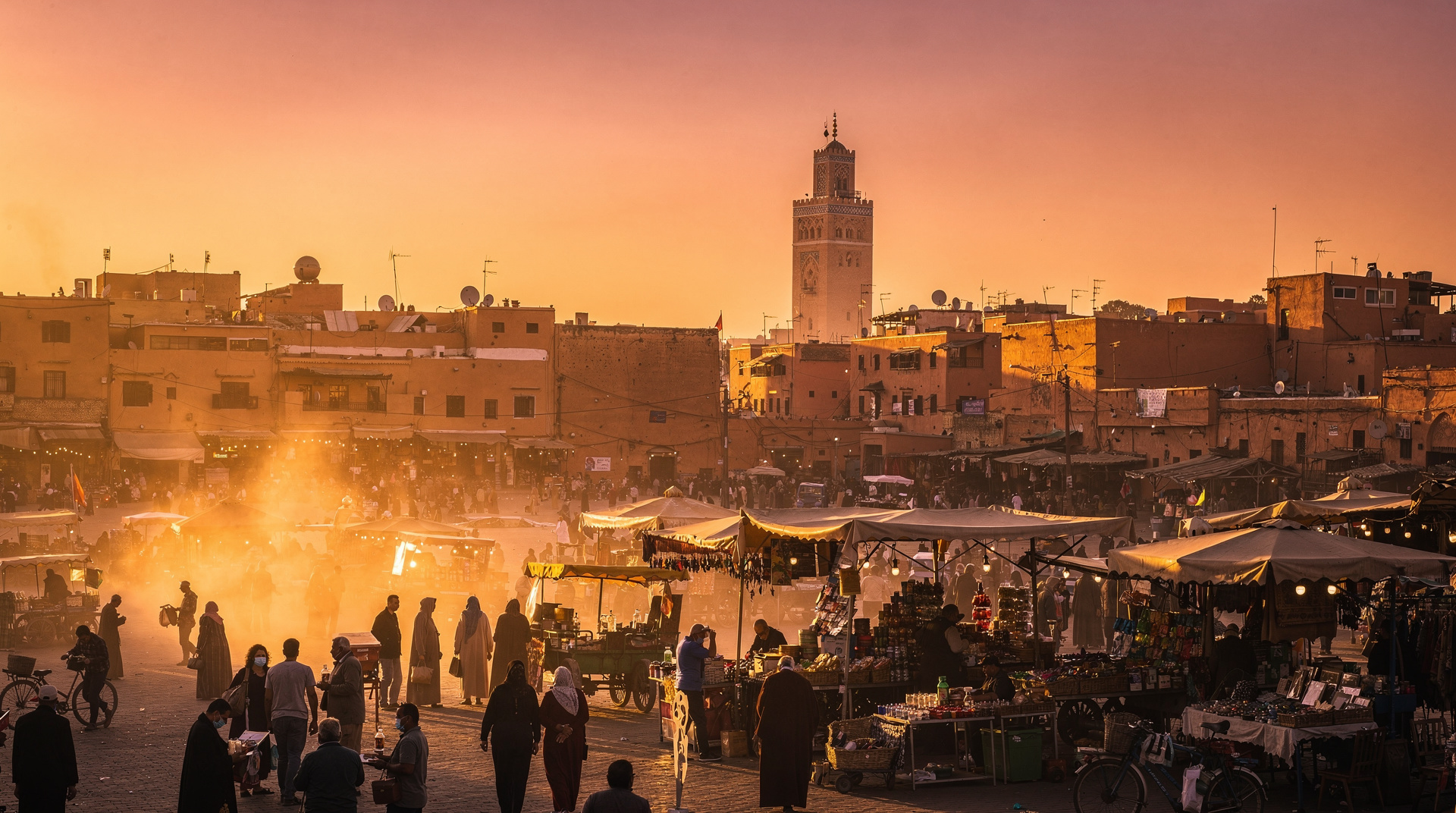
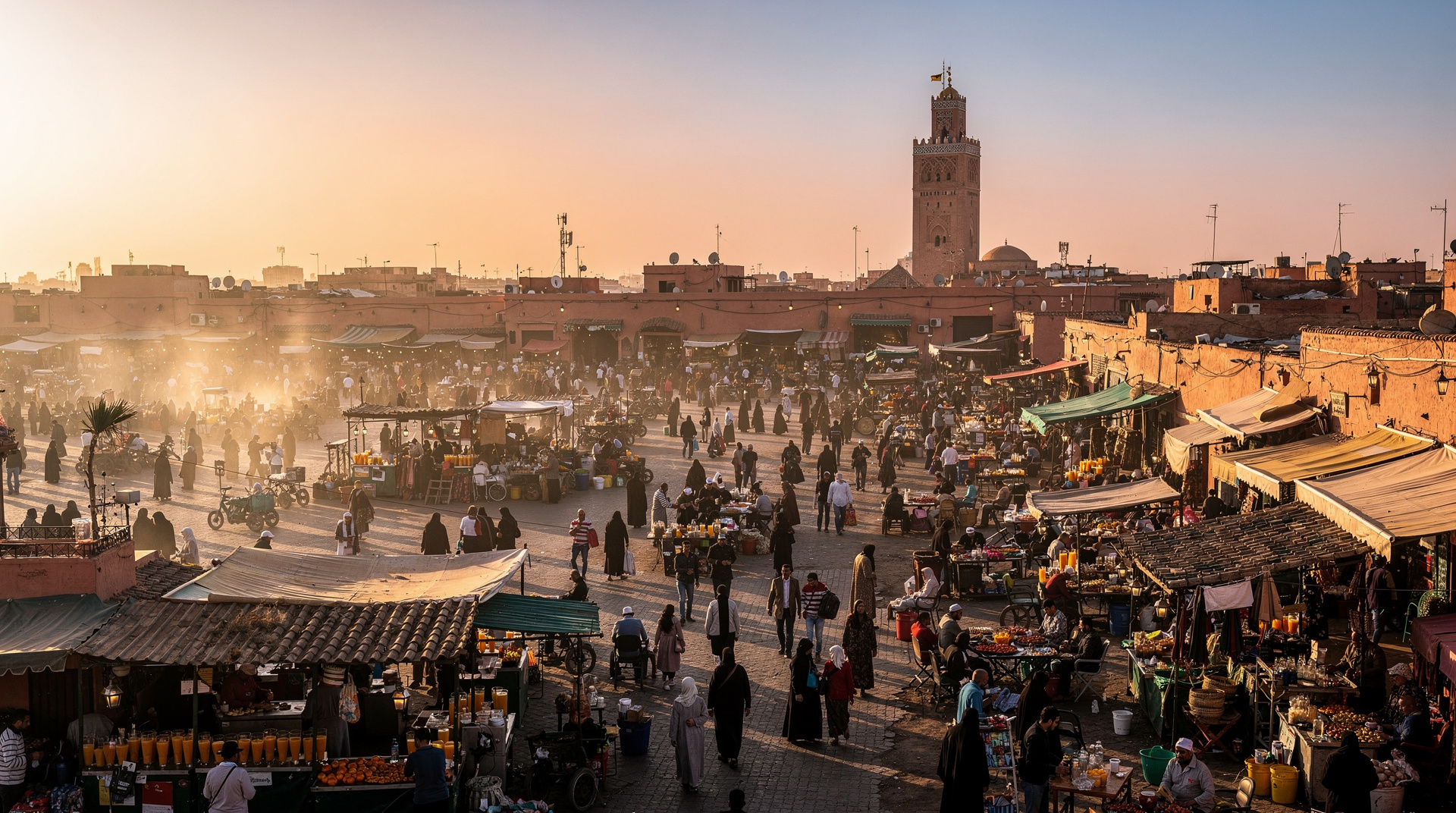
First excursion: down to the Rcif square, which is the closest thing the medina has to a navigation hub. From here, donkeys loaded with goods pass in every direction, bicycle bells ring constantly, and men with carts of goods shout to clear the alleys ahead of them. I stood in the middle of the square for fifteen minutes and watched traffic and tried to understand the logic of it.
There is no logic in the way I was looking for. The medina’s layout is organic — accumulated over twelve centuries, expanded, contracted, burned, rebuilt, partitioned, reunified — and does not yield to grid thinking. You navigate by relationship: this alleyway connects to that alleyway, which emerges near the sound of the hammering from the metalworkers’ souk, which is opposite the spice market smell, which is forty metres from the corner I recognise.
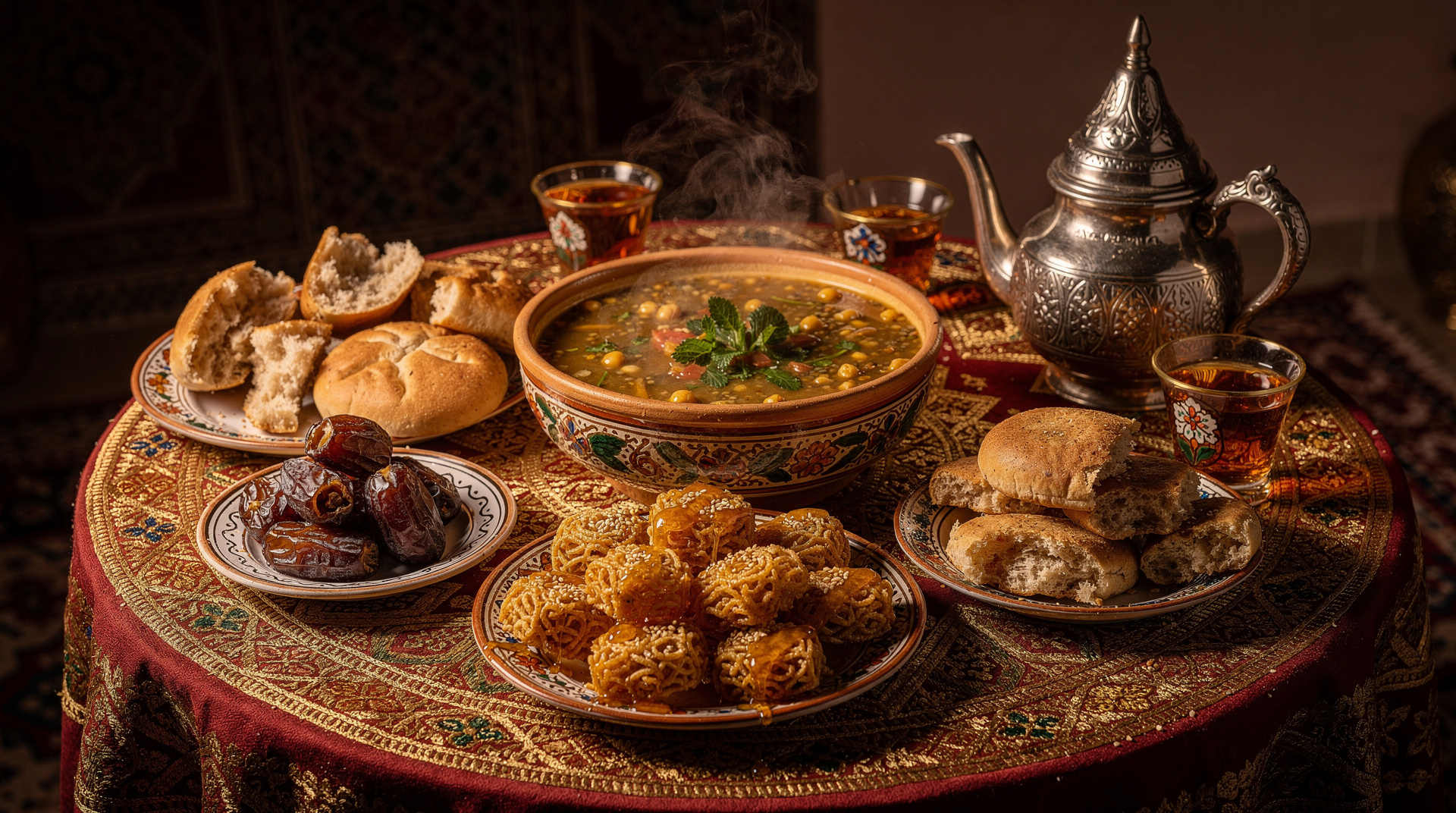
By the end of the first afternoon I had found, by accident: a soup kitchen serving harira to a queue of old men, a madrasa courtyard that was open and empty, a neighbourhood hammam with a sign in Arabic only, and a woman selling argan oil from a basket who told me in French that tourists never came to her quarter and I should come back the next morning.
I went back.
October 12, 2020. Evening.
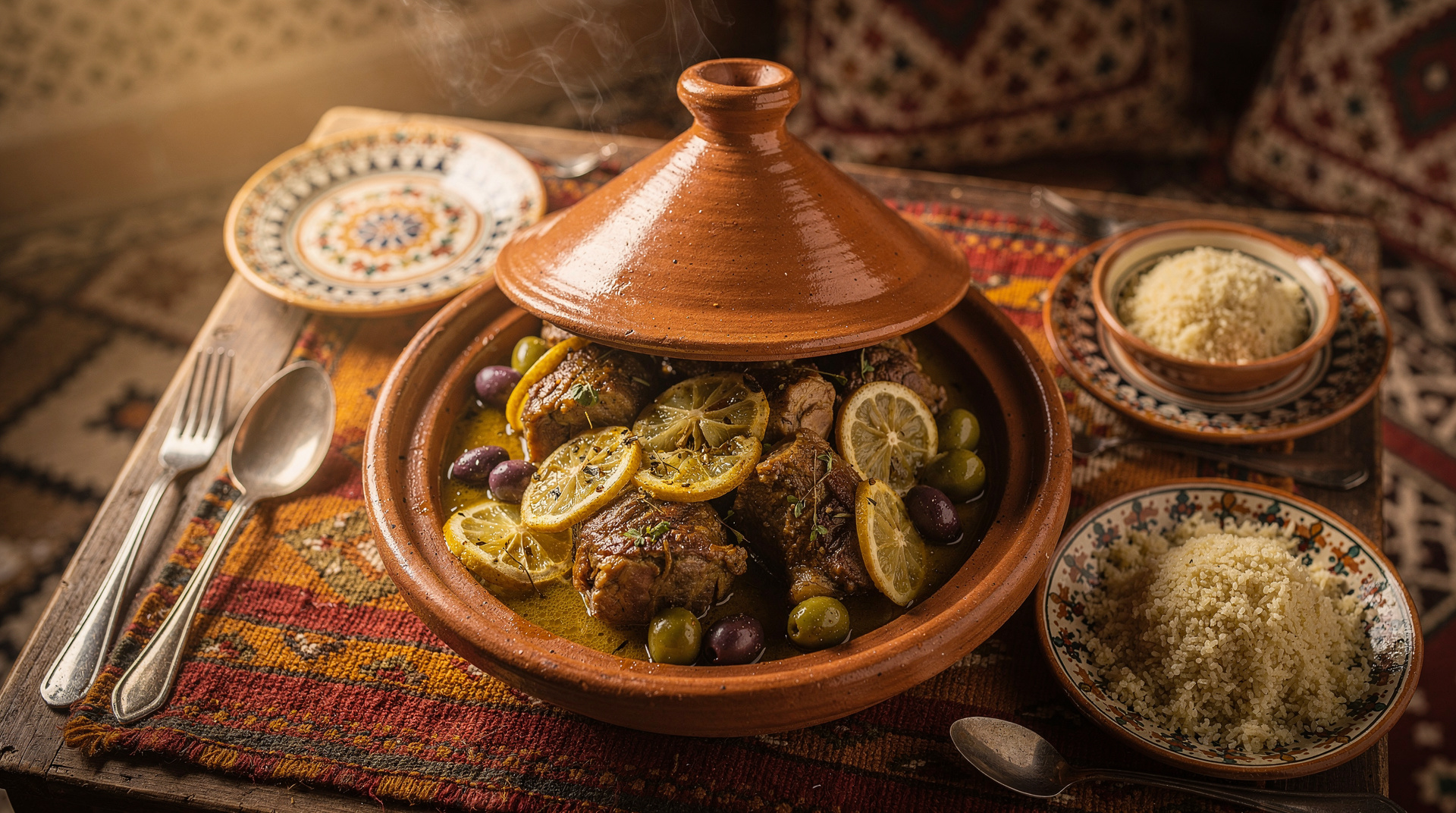
Dinner at a restaurant I found by following the smell of charcoal from an alleyway junction. Grilled kefta, a salad, khobz bread, a glass of lemon juice. 65 MAD. I sat outside on a plastic chair on a slope of alleyway. Two cats waited under my chair. An old man across the alley was watching television through an open window. This is what I came to Morocco to find and it cost less than four euros.
Day Two: The tanneries and a guide’s city
October 13, 2020. Morning.
I had hired a guide for the morning — something Youssef had arranged — a young man named Hamza who was born in the Qarawiyyin quarter and was working through a tourism degree. His knowledge of the medina was not navigational in the way a map is navigational: it was relational. He knew which family owned which house. He knew which workshop had been there for five generations. He knew the name of the man who managed the well that appears at an unexpected corner of an alleyway and is at least six hundred years old.
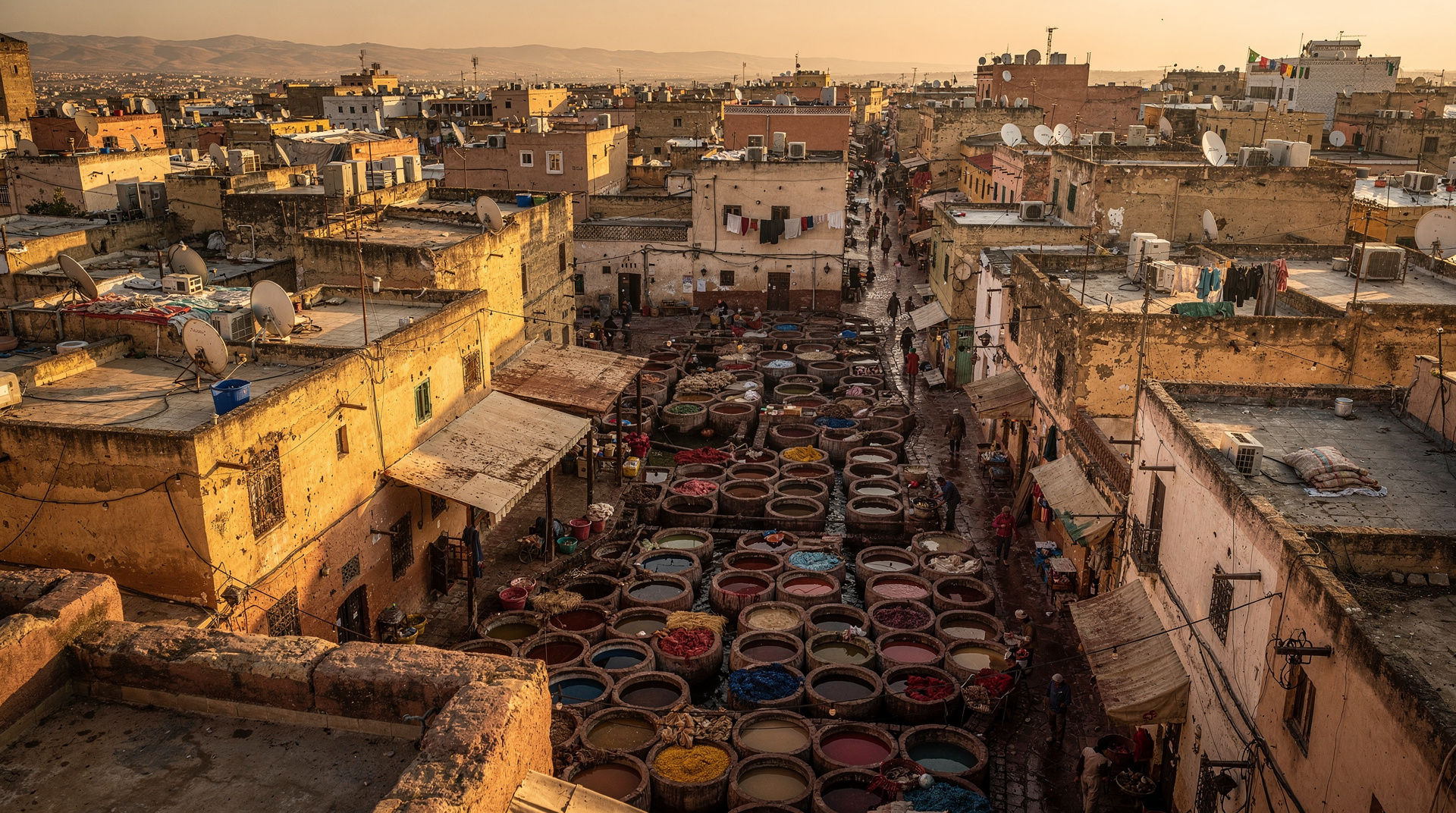
We went to the Chouara tannery via a route I could not have found alone. The standard tourist approach is via the viewing terraces of the leather shops above, where the owners give you a sprig of mint to hold against the smell of the pigeon dung that softens the hides. Hamza took me around the back, to a lower position where you can see the workers directly rather than from above, and where the scale of the operation — dozens of workers moving between dozens of dye vats in a sequence of preparations that has not changed substantially in centuries — becomes fully visible.
The smell is exactly as described. The mint does help.
A guided medina tour that includes the Al-Attarine Madrasa and tannery is worth doing on your first morning in Fes for exactly what Hamza gave me: context that transforms what you see from spectacle into understanding.
October 13, 2020. Late morning.
Hamza took me to the Bou Inania Madrasa, which I had visited briefly before but never understood. The madrasa was built in the fourteenth century by the Marinid sultan Abu Inan Faris and served as both a theological school and a demonstration of the sultan’s piety and wealth. The carved plaster of the upper walls, the zellige tilework of the lower section, the cedar woodwork of the screens — all of it executed with a precision that has not aged. The central courtyard, when the tourist groups are between visits and quiet falls into it, feels genuinely sacred.
October 13, 2020. Afternoon, alone.
After Hamza left, I walked without destination. I found: a street of woodturners using foot-powered lathes, a stall selling snail soup from a large communal pot, a bread oven producing circular loaves that residents bring on trays to be baked communally, and a small square with three cats and a single orange tree and nobody else for the twenty minutes I sat there.
This is what the Fes medina does if you stop trying to navigate it and just walk. It is not a place you can optimise. It is a place you can only receive.
October 13, 2020. Evening.
A cooking class in the medina was something I had considered and rejected, and I was wrong to reject it. The woman in the next room at my riad had done one that afternoon and arrived at dinner radiating the particular contentment of someone who has just made something with their hands in a kitchen in a foreign country. She had learned to make harira and pastilla. She was more competent at Moroccan cooking than I was. I was jealous.
Day Three: Getting properly lost and finding something better
October 14, 2020. Morning.
I decided to test the map deliberately. Youssef had marked a route to the Qarawiyyin mosque — the oldest continuously operating university in the world, founded in 859 CE, not open to non-Muslims — but had told me the courtyard glimpsed through the doorway was worth seeing. I walked toward it using only the map, without looking at my phone.
I missed a turn somewhere and ended up in a quarter I had not been to — residential, quiet, laundry strung between windows, a woman sweeping a step who looked up at me with mild surprise but no alarm. I walked three more turns and emerged into a small market I did not know existed: fresh vegetables, live chickens, a spice seller with saffron and cumin in open sacks.
I ate breakfast at a stall in this market — eggs, bread, preserved olives, argan oil, a glass of hot tea with mint. 25 MAD. Three old men at the adjacent plastic table were playing cards and arguing about something with the comfortable fluency of people who have been arguing about the same thing for forty years.
This is what I came to find and I found it by getting properly lost.
October 14, 2020. Midday.
The Qarawiyyin door. Through the carved cedar screen I could see the courtyard, the fountain, the columns, the light. A guard stood to one side and let me look for a few minutes without interference. The courtyard was mostly empty. A student crossed it with books. The architecture is, even glimpsed through a door, extraordinary — a thousand years of accumulated embellishment, additions, renovations, all in dialogue with the original structure.
Fes is a city you do not fully understand without knowing that this building exists at its centre and has existed, in continuous operation, for eleven centuries. Everything else in the medina relates to it somehow — the souks organised around provisioning its students, the madrasas built to house them, the neighbourhoods shaped by their movements. The mosque is not a tourist attraction. It is a fact about the city.
October 14, 2020. Afternoon.
My last afternoon in the medina. I made a deliberate effort to do nothing useful. Sat in the main tannery square and watched the tourist groups move through it. Bought a few grams of saffron from a spice merchant who gave me an excellent price after ten minutes of conversation about where I was from and what I thought of Fes. Visited the Nejjarine Museum of Wood Arts and Crafts, which is housed in a restored eighteenth-century caravanserai and is genuinely excellent and almost always empty — the tourist traffic goes to the tannery and the madrasa and forgets the museum.
October 14, 2020. Night.
On my last evening, an unexpected thing happened. Youssef asked if I wanted to accompany him to a Gnawa music gathering in a private house a few streets from the riad. The Gnawa are a community descended from sub-Saharan slaves brought to Morocco in the seventeenth and eighteenth centuries; their music — hypnotic, percussive, built around the guembri bass lute and the qraqeb iron castanets — is both sacred ritual and, increasingly, a living popular art form.
We walked to a house in the Andalusian quarter. The gathering was in a courtyard — twelve musicians, thirty people sitting around the edges, children sleeping in a corner. The music started slowly and built over three hours into something that I cannot properly describe and that no playlist I have found since has replicated. The guembri player’s left hand on the strings produced a tone I had not heard from any other instrument.
I sat on a borrowed cushion and listened until midnight. Nobody minded that I was there. On the walk back, Youssef said: “This is Fes. Not the tannery.”
He was right. The tannery is Fes for one hour in the morning. This — the music in the courtyard, the old men playing cards in the neighbourhood market, the madrasa courtyard in the quiet between tour groups — this is Fes for the rest of the time.
Our Fes destination guide has everything practical: neighbourhoods, accommodation, what to see and in what order. But the diary version of advice is simpler: give it three days. Walk without a plan at least once. Accept that you will get lost, and let that be a feature rather than a problem.
The medina will give you more than you expected once you stop expecting specific things from it.
Practical notes for your own three days
A few things I did not put in the diary but wish I had known going in. First, the medina has no vehicle traffic — everything moves by handcart, donkey, or foot, which means porters and cart-pullers have absolute right of way and shout “balak” to clear the alley; step aside immediately rather than trying to work out where they are going. Second, a local guide for at least the first morning is not a luxury here the way it can feel elsewhere in Morocco — Fes el-Bali genuinely rewards local knowledge more than any other medina in the country, precisely because its logic is relational rather than geometric, as I found out the hard way.
Third, if you are combining Fes with the rest of the imperial cities circuit, our imperial cities itinerary sequences Fes, Meknes, Rabat, and Marrakech in a sensible order, and the Meknes destination guide covers the quieter imperial city 60km away that most Fes visitors skip entirely.
If three days feels like a lot for one medina, it is worth saying plainly: it is not too much. Compare it with how little time most itineraries allocate — the standard 10-day Morocco itinerary gives Fes two nights, which is enough to see the highlights but not enough to get properly lost the way this diary describes. If Fes is a priority rather than one stop among many, build the extra day in deliberately.
Some of what I stumbled on by accident can be prepared in advance if you prefer. Our Fes souks guide explains how the trades are grouped, the Fes madrasas guide goes deeper on the courtyards, and the Fes street food guide will help you eat well without relying on luck. If you want a base with a proper welcome, our pick of riads in Fes is the place to start, and the day trips from Fes are the easiest way to step out of the medina for a day once you have had your fill of alleyways.
Frequently asked questions about Diary of three days lost in the Fes medina
How many days do you actually need in the Fes medina? Two full days covers the major sites (tannery, madrasas, Qarawiyyin exterior) with a guide. Three days, as in this diary, is what it takes to also get properly lost, find the quieter neighbourhood markets, and have a chance at something unplanned.
Is it easy to get lost in the Fes medina, and is that dangerous? It is very easy to get lost — the medina has thousands of alleyways with no grid logic — but it is not dangerous. Getting lost here means confusion and backtracking, not risk; locals are generally helpful if you ask directions, and the medina is small enough that any wrong turn eventually leads back to a recognisable landmark or main artery.